Happy Accidents: 10 Americans Whose Wrong Turns Wrote History
Photo: Metropolitan Transportation Authority of the State of New York from United States of America, CC BY 2.0, via Wikimedia Commons
We like to tell success stories as if they were planned. The visionary saw the opportunity, made the move, and history followed. But spend enough time digging into the real origin stories behind America's most remarkable lives, and a different pattern emerges: the missed train, the wrong building, the accidental conversation that changed everything.
Sometimes the detour is the destination.
Here are ten Americans whose greatest achievements began with a mistake, a misunderstanding, or a stroke of pure, glorious bad luck.
1. Spencer Silver Invented the Wrong Glue — and Accidentally Created a Billion-Dollar Product
In 1968, a 3M chemist named Spencer Silver was trying to develop a super-strong adhesive. He failed spectacularly. What he produced instead was a weak, pressure-sensitive compound that could stick to surfaces and peel away without leaving a mark. Silver spent years trying to convince colleagues the stuff was useful. Nobody cared.
Then his coworker Art Fry, frustrated that his church choir bookmarks kept falling out of his hymnal, remembered Silver's useless glue. The Post-it Note was born from a failed experiment and a minor Sunday morning annoyance. Today, 3M sells billions of them every year.
2. Christopher Columbus Was Sailing to the Wrong Continent Entirely
The most consequential wrong turn in the history of exploration wasn't a wrong turn at all — it was a wrong calculation. Columbus believed, against the prevailing scientific consensus of his day, that Asia was much closer to Europe than it actually was. He was wrong by roughly 10,000 miles.
He died believing he'd reached the outskirts of Asia. He never knew he'd found something the European world hadn't known existed. The entire history of the Americas pivots on a navigational miscalculation.
3. Roy Plunkett Went Looking for a New Refrigerant and Found Teflon
In 1938, a DuPont chemist named Roy Plunkett was experimenting with refrigerant gases when one of his test cylinders stopped releasing gas even though it still had weight. Curious, he cut the cylinder open. Inside, the gas had polymerized into a white, slippery solid with an almost supernatural resistance to heat and chemicals.
Plunkett hadn't been looking for anything of the sort. But Teflon — which would eventually coat cookware, spacecraft, and Gore-Tex jackets — was born from a gas tank that simply refused to behave.
4. The Wrong Address That Launched Estée Lauder's Empire
Estée Lauder spent years selling her uncle's homemade skin creams out of whatever venue would have her — hair salons, hotel lobbies, beauty counters that barely tolerated her presence. The story of how she finally cracked Saks Fifth Avenue involves a level of audacity that looks, in retrospect, less like a mistake and more like a calculated gamble.
When the Saks buyer turned her down, Lauder spilled her products — accidentally, she always insisted — at a charity event attended by exactly the right women. The subsequent demand forced Saks to call her. Whether it was a genuine accident or a brilliant piece of theater, the result was the same: a foothold in American luxury retail that she never relinquished.
5. George de Mestral Got His Coat Stuck in Burrs — and Invented Velcro
In 1941, a Swiss-American engineer named George de Mestral returned from a hunting trip in the Alps with his coat and his dog both covered in cocklebur seeds. Most people would have cursed and moved on. De Mestral put the burrs under a microscope.
What he saw was a perfect natural hook-and-loop system. It took him a decade to replicate it in fabric, but the result — Velcro — became one of the most widely used fasteners in the world. NASA used it. Surgeons used it. Toddlers with sneakers used it. All because a man's coat got stuck.
6. A Failed Mining Trip Pointed John Muir Toward Yosemite
John Muir arrived in California in 1868 as a young man with vague ambitions and no particular plan. He'd considered going to South America to follow in Alexander von Humboldt's footsteps, but couldn't afford the fare. He'd also thought about heading to the Sierra Nevada to look for work in the mining industry.
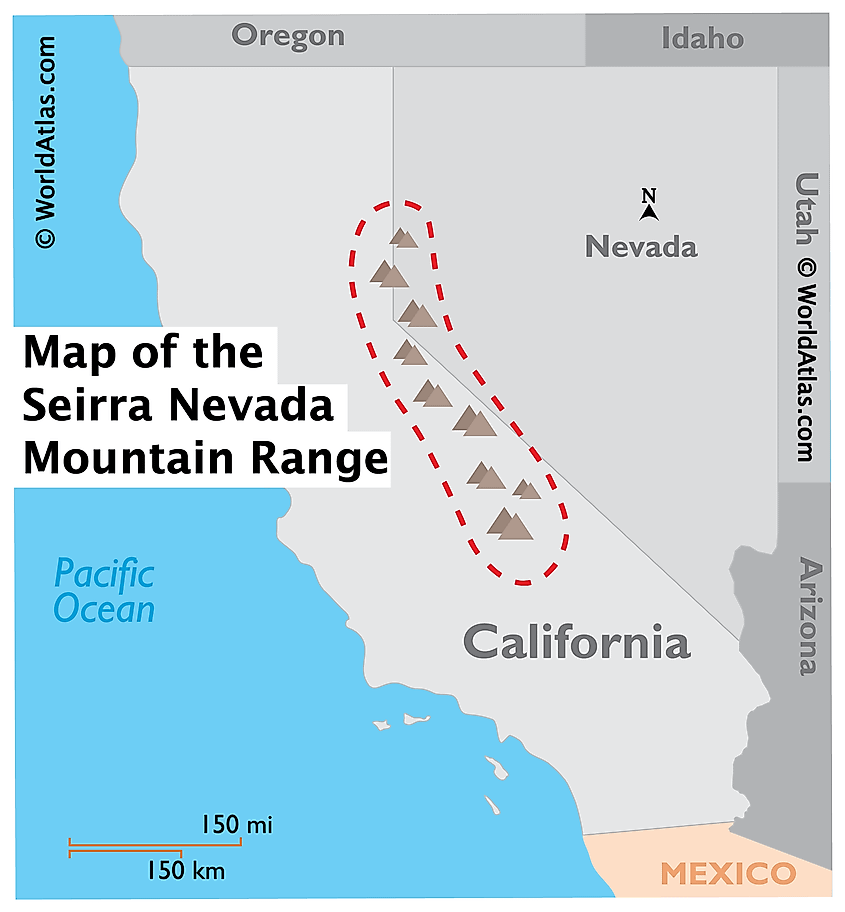 Photo: Sierra Nevada, via www.worldatlas.com
Instead, almost by default, he walked into Yosemite Valley. The experience rewired him completely. The man who would go on to found the Sierra Club, convince Theodore Roosevelt to expand the national park system, and permanently reshape America's relationship with its wilderness — that man was partly a product of a failed travel plan and an empty wallet.
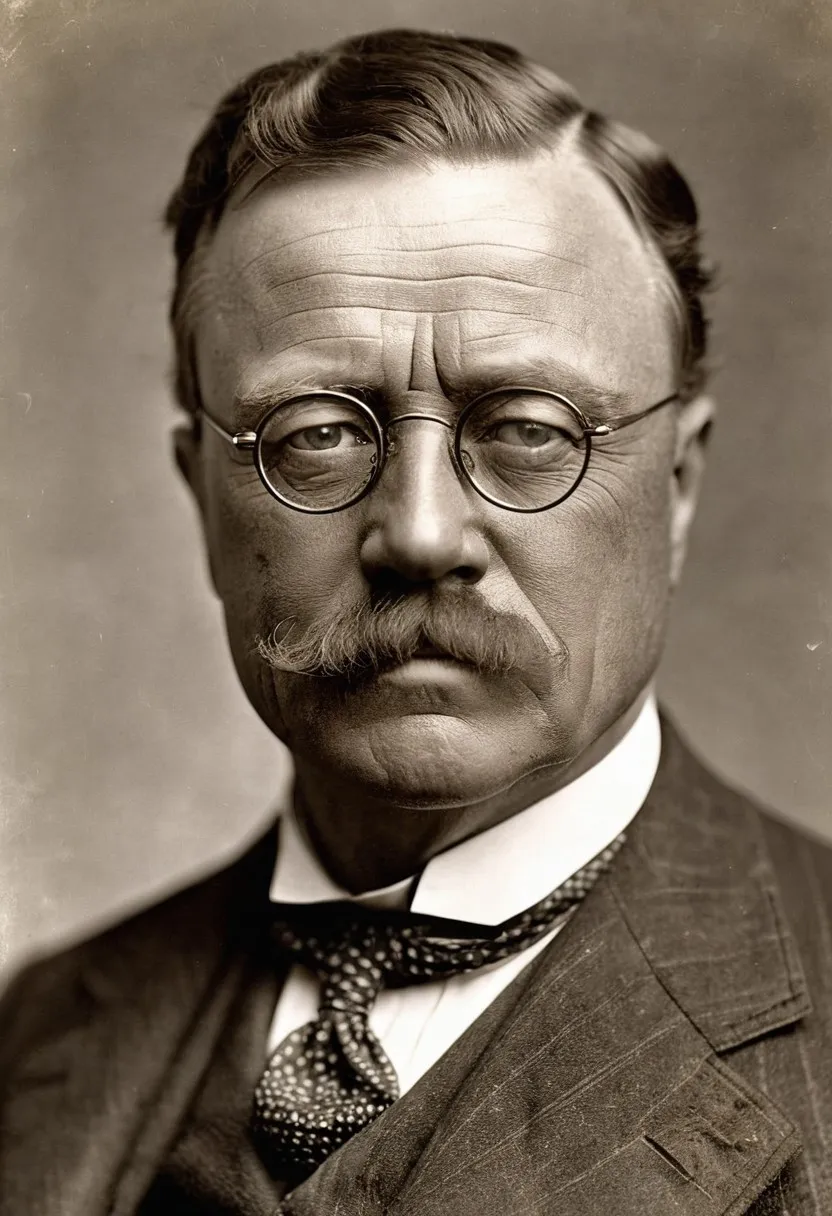 Photo: Theodore Roosevelt, via imgcdn.stablediffusionweb.com
 Photo: Yosemite Valley, via c8.alamy.com
7. Howard Schultz Took the Wrong Job and Accidentally Reinvented American Coffee Culture
Howard Schultz wasn't trying to build a coffee empire when he joined a small Seattle bean retailer called Starbucks in 1982. He was the head of marketing for a Swedish housewares company when he noticed, almost as an afterthought, that this tiny Pacific Northwest chain kept ordering an unusual number of drip coffeemakers.
He visited. He was fascinated. He took a job there that most of his colleagues thought was a step backward. Then a trip to Milan showed him what an espresso bar could be, and the rest — thousands of locations, a cultural shift in how Americans spend their mornings — followed from what was, essentially, a curious detour.
8. Milton Hershey's First Two Candy Companies Failed Completely
Before Milton Hershey became synonymous with American chocolate, he failed twice. His first candy company in Philadelphia collapsed after six years. His second, in New York, folded even faster. He went back to Lancaster, Pennsylvania, essentially broke, and started over with caramel — which he was good at — before eventually pivoting to chocolate.
The failures weren't detours from his success story. They were the education that made it possible. Every bad batch, every closed storefront, every creditor's letter taught him something he couldn't have learned any other way.
9. Rosa Parks Almost Wasn't on That Bus
The historical record shows that Rosa Parks was tired on the evening of December 1, 1955 — tired in the way that a woman who had worked a full day as a seamstress, and who had been fighting for civil rights for years before that night, is tired. She boarded the Cleveland Avenue bus in Montgomery, Alabama, not as part of a planned act of resistance, but because she needed to get home.
The bus she boarded, the driver who confronted her, the particular seat she chose — these were the specifics of an ordinary evening that became extraordinary. The NAACP had been looking for a test case for months. Parks, almost by accident of timing, became the one that stuck.
10. The Train William Durant Missed That Built General Motors
William Durant was already a successful carriage manufacturer when he missed a train connection in 1904 and found himself with unexpected time to kill in Flint, Michigan. To fill the hours, he took a test drive in a Buick — a small, struggling automobile company that was about to go under.
He bought it instead of catching the next train. Within four years, he had parlayed that impulse purchase into the founding of General Motors, assembling Buick, Oldsmobile, Cadillac, and Pontiac under one corporate roof. The American auto industry as we know it was partly built on a missed connection and an afternoon with nothing better to do.
The Pattern Behind the Accidents
Look at these ten stories long enough and a pattern emerges. None of these people were simply lucky. What they shared was a willingness to pay attention when something unexpected happened — to ask why instead of moving on, to see possibility where most people saw inconvenience.
The wrong train doesn't change your life. What you do when you miss it does.