The Farmer's Daughter Who Made the Courtroom Flinch
Photo: Joe Haupt from USA, CC BY-SA 2.0, via Wikimedia Commons
The Farmer's Daughter Who Made the Courtroom Flinch
There's a particular kind of laugh that powerful institutions reserve for people they consider harmless. It's not cruel, exactly. It's dismissive — the laugh of someone who can't quite believe they have to explain why the answer is no.
Florence Ellinwood Allen heard that laugh a lot.
She heard it from law school administrators who told her, politely and then less politely, that the legal profession was not designed with her in mind. She heard it from political insiders who said a woman on the Ohio Supreme Court was a charming idea, the sort of thing that sounded nice in a speech but would never actually happen. She heard it from colleagues who assumed her appointment to the federal bench was a curiosity, a token gesture by a president looking for good press.
Florence Allen outlasted every single one of them.
A Childhood Built on Patience and Precision
She was born in 1884 in Salt Lake City but grew up in Jefferson, Ohio, the daughter of Clarence Allen, a classics scholar and state legislator who kept bees on the family farm. Her mother, Corinne, was one of the first women to graduate from Western Reserve University. Ambition wasn't just tolerated in the Allen household — it was the ambient temperature.
 Photo: Jefferson, Ohio, via c8.alamy.com
As a child, Florence spent hours with her father among the hives. Beekeeping, she'd later say, was one of the great teachers of her life. You couldn't rush it. You couldn't bully it. You had to move carefully, read the signals, stay calm when everything around you was agitated, and accept that the sting was sometimes part of the deal. You learned to work within the logic of a system that hadn't been built for your comfort.
She would need every bit of that education.
Allen studied music and literature at Western Reserve College, then went to the University of Chicago. She was drawn to law — specifically to the intersection of law and justice, which she had already noticed were not always the same thing. She applied to Western Reserve's law school. They told her no. She applied to New York University. They said yes, conditionally, and she graduated in 1913. She later earned a law degree from NYU, passed the Ohio bar, and set up practice in Cleveland.
Nobody was waiting for her.
Building a Practice in a Room That Wouldn't Move
The early years were grinding. Cleveland's legal establishment in 1914 was not a welcoming place for a woman who wanted to do serious work rather than notarial paperwork. Allen carved out a niche in legal aid work, representing women and workers who couldn't afford private counsel. She wasn't playing the long game — she was fighting the immediate one. But the long game was being built anyway, one case at a time.
She became active in the suffrage movement, arguing publicly and effectively for the Nineteenth Amendment at a time when that position still cost you something. When the amendment passed in 1920, Ohio women suddenly had the vote — and Allen was ready with her next move. She ran for Cuyahoga County prosecutor. She lost, but not by much. Then she ran for the Ohio Supreme Court.
The political establishment didn't take her seriously. Women's organizations did. Allen organized, canvassed, and built a coalition that the insiders hadn't thought to account for. In 1922, she won. She became the first woman ever elected to a state supreme court in American history.
The laugh got a little quieter.
The Precision of the Hive
On the bench, Allen was known for something that surprised people who expected either ideological fire or performative caution: she was methodical. Rigorous. Her opinions were dense with careful reasoning, built argument by argument the way her father built frames in a hive — with patience, with purpose, with no wasted motion.
She was reelected in 1928 with the largest majority in Ohio Supreme Court history at the time. She was developing a reputation that traveled beyond Ohio: someone who could do the work, who didn't flinch, who understood that the law's power came from its consistency and not from whoever was wielding it.
In 1934, Franklin Roosevelt appointed her to the Sixth Circuit Court of Appeals — the first woman ever named to a federal appellate court. The appointment drew the predictable mix of praise and condescension. Some commentators called it a political gesture. Allen called it a job, and went to work.
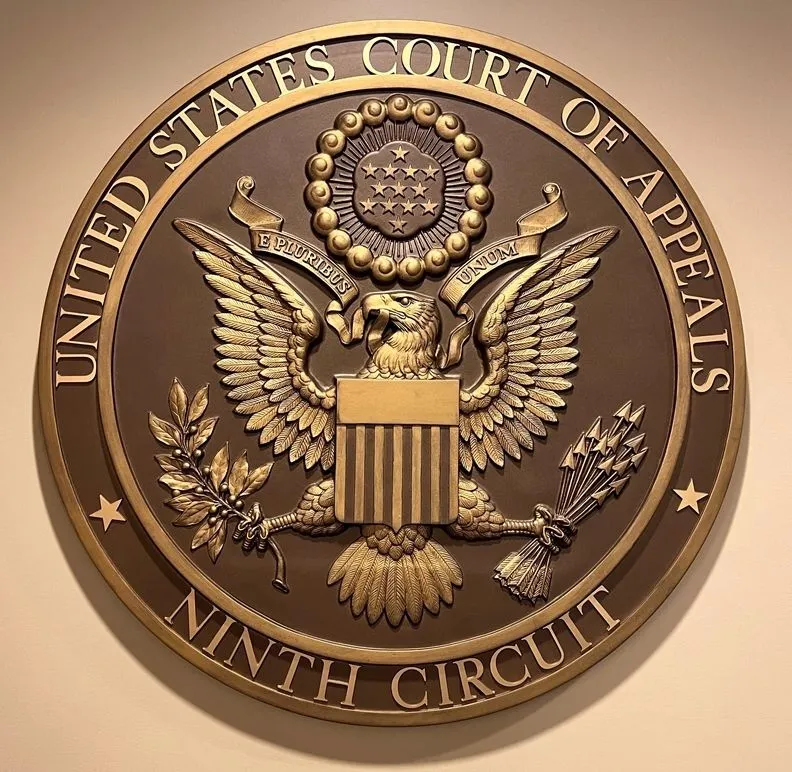 Photo: Sixth Circuit Court of Appeals, via cdn.firespring.com
She served on the Sixth Circuit for thirty years. She wrote opinions on labor law, civil rights, and constitutional questions that shaped American jurisprudence for decades. In 1958, her colleagues on the circuit elected her Chief Judge — another first.
What the Hive Actually Teaches
People who knew Florence Allen often mentioned her composure. Not coldness — she was known as warm, even funny in private — but a settled quality, an absence of the anxious energy that can make ambitious people brittle. She didn't seem to need the room's approval before she walked into it.
That's the beekeeper's lesson, maybe. You can't control the hive. You can only control your own movements, your own steadiness, your own willingness to stay present when things get uncomfortable. The sting is part of the work. You suit up and you go in anyway.
Florence Allen died in 1966, having never quite made the Supreme Court — she was considered seriously at least three times, and each time the moment passed. It was the one ceiling she couldn't push through.
But she had pushed through enough others that the ceiling above her was a good deal higher than the one she'd found. The women who came after her — on state benches, on federal circuits, eventually on the Supreme Court itself — walked into rooms that Florence Allen had already made a little less hostile.
She didn't do it loudly. She did it precisely, patiently, one case at a time.
The beekeeper's daughter knew how that worked.