They Called It Crazy. History Called It Correct. Ten Visionaries Who Proved the Doubters Wrong.
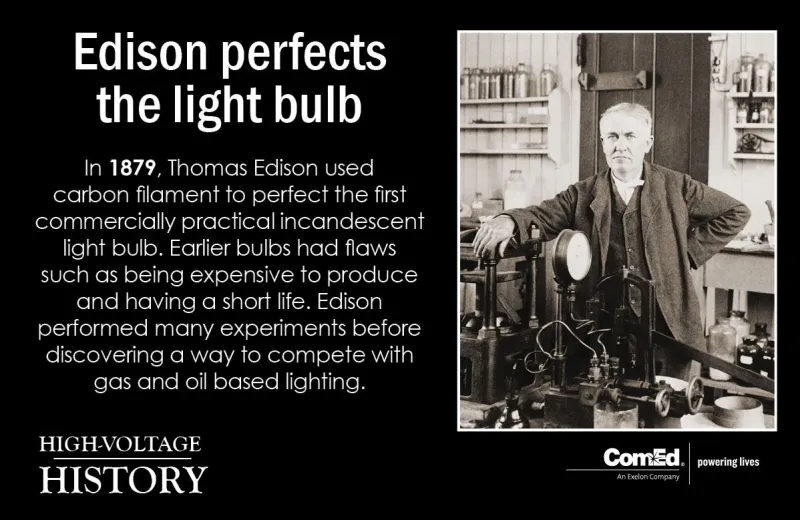
Photo: vintage inventor entrepreneur lightbulb idea breakthrough moment historic, via pbs.twimg.com
Rejection is common. Public rejection — the kind where someone with authority tells you, in front of an audience, that your idea is foolish — is something else entirely. It's designed to settle the matter. To close the door so firmly that you stop knocking.
For the ten people on this list, it had the opposite effect.
1. Ignaz Semmelweis — The Doctor Who Said Wash Your Hands (1847)
In 1847, a Hungarian physician named Ignaz Semmelweis was working at a Vienna maternity clinic where women were dying of childbed fever at terrifying rates. He noticed something: the wards staffed by medical students who came directly from performing autopsies had death rates five times higher than those staffed by midwives. His theory — that doctors were carrying something invisible and deadly on their hands — was met with open contempt by the medical establishment. Doctors were gentlemen, the argument went. Gentlemen's hands were not dirty.
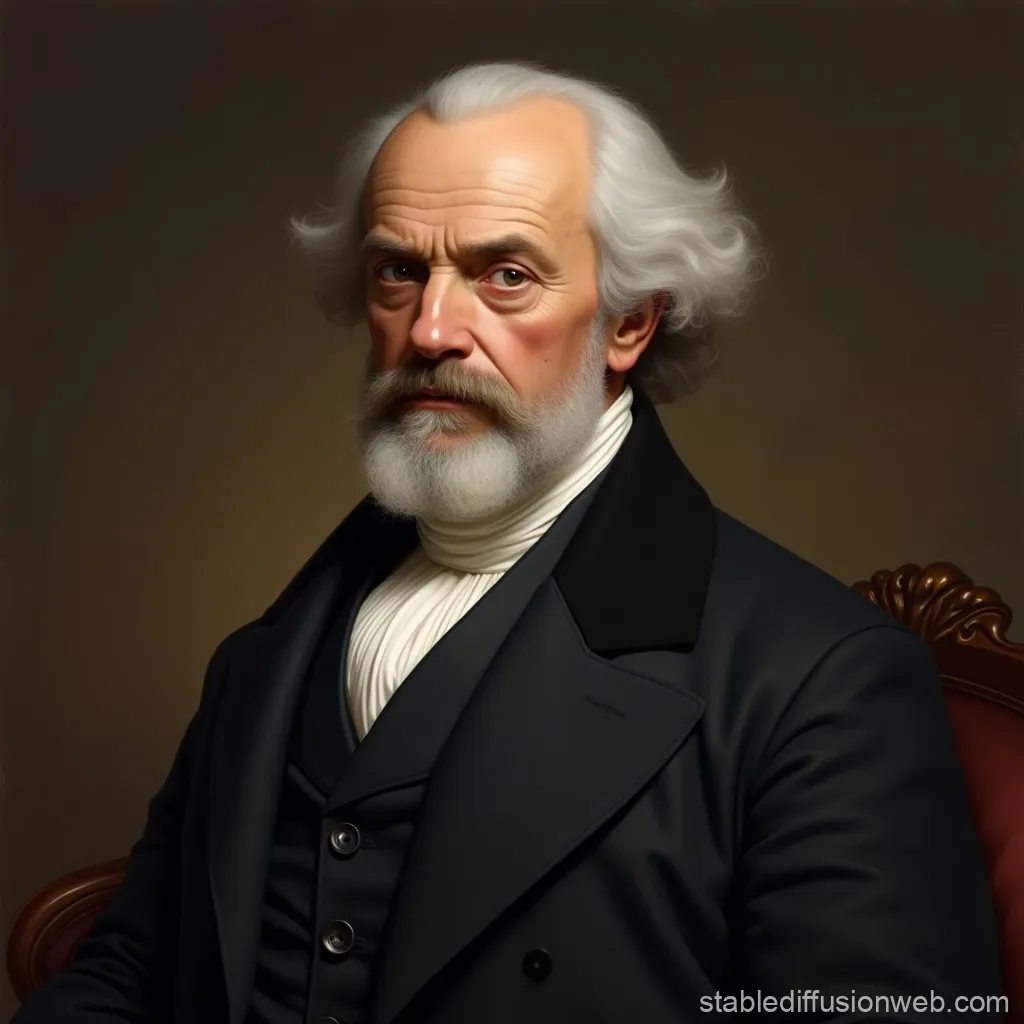 Photo: Ignaz Semmelweis, via imgcdn.stablediffusionweb.com
Semmelweis was mocked in journals, dismissed from his position, and eventually committed to a mental institution. He died there in 1865, two weeks after admission, possibly from the very infection he'd spent his career trying to prevent. Fourteen years later, Louis Pasteur's germ theory confirmed everything Semmelweis had said.
What he did after the rejection: He kept meticulous records. For years, he compiled mortality statistics from clinics across Europe, building an evidence base so overwhelming that ignoring it eventually became intellectually embarrassing. The data outlasted the ridicule.
2. Alfred Wegener — The Meteorologist Who Said the Continents Move (1912)
Alfred Wegener was a German meteorologist, which is precisely the wrong profession to be in when you're trying to tell geologists that every continent on Earth was once a single landmass that slowly drifted apart. When he presented the theory of continental drift in 1912, the geological community in America was particularly hostile. One geologist called it "utter, damned rot." The American Association of Petroleum Geologists held a symposium specifically to rebut him.
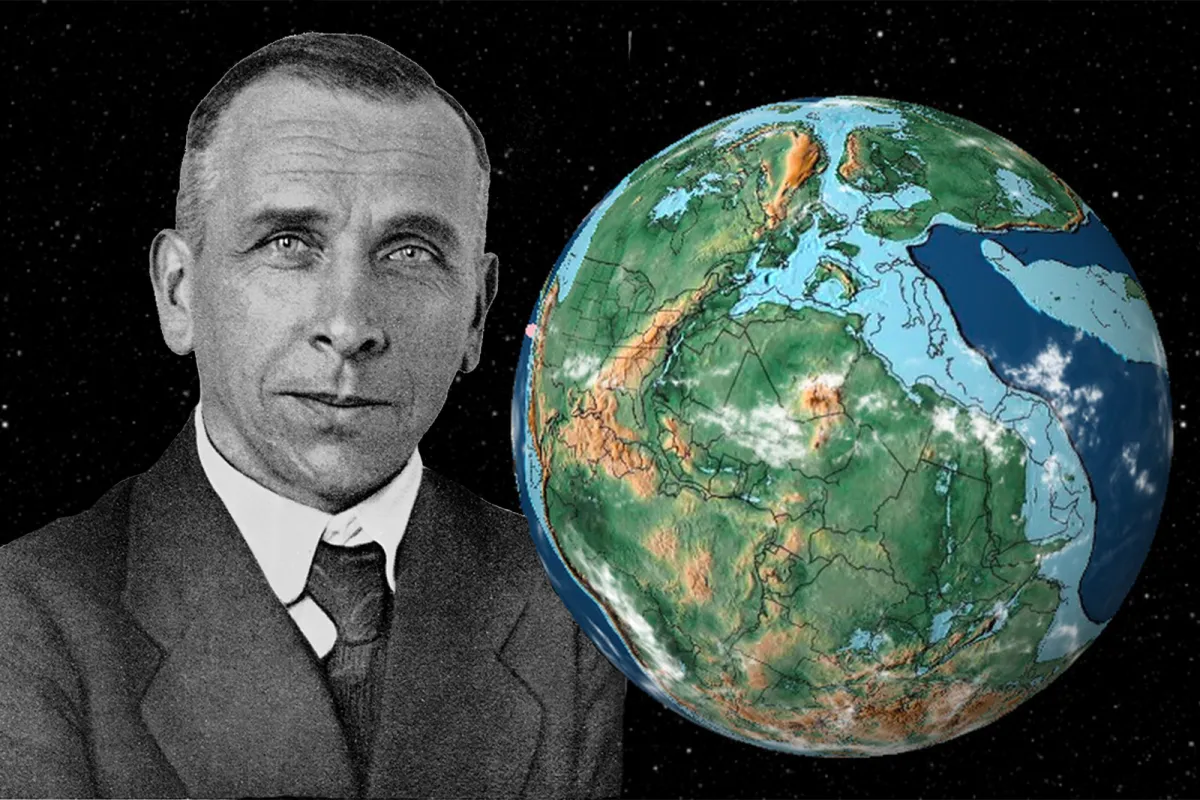 Photo: Alfred Wegener, via teoriaonline.com
What he did after the rejection: He went to Greenland. Twice. He continued fieldwork, continued refining his data, and died in 1930 on a Greenland expedition before seeing his theory accepted. Plate tectonics — essentially Wegener's idea with better physics — became the foundational framework of modern geology in the 1960s.
3. Nikola Tesla — The Engineer Who Said Power Could Travel Through the Air (1899)
By 1899, Tesla had already helped build the AC electrical system that powered America. That wasn't enough to stop financier J.P. Morgan from pulling his funding when Tesla proposed wireless electrical transmission — the idea that power itself could be broadcast through the atmosphere to anyone who needed it. Morgan's view was simple and financial: if you can't put a meter on it, there's no business. Tesla's Wardenclyffe Tower project collapsed. He died broke in a New York hotel room in 1943.
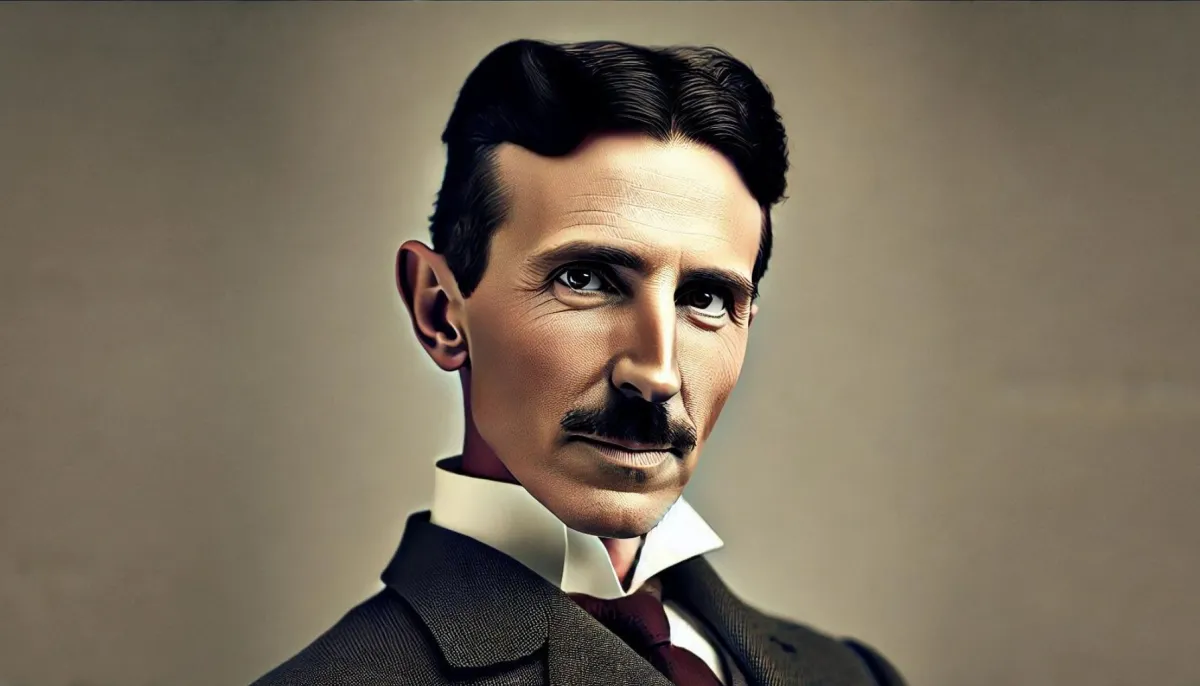 Photo: Nikola Tesla, via la-voiture.fr
What he did after the rejection: He kept designing. His notebooks from the final years are dense with concepts — some visionary, some impractical — that engineers and physicists are still parsing. Wireless power transfer is now a real technology, used in everything from electric toothbrushes to EV charging pads.
4. Decca Records — And the Band They Passed On (1962)
This one belongs to the rejecter rather than the rejected. In January 1962, a Decca Records executive named Dick Rowe auditioned a young band from Liverpool and passed. Guitar groups, he reportedly told their manager, were on the way out. The band was the Beatles. Rowe signed Brian Poole and the Tremeloes instead.
Within two years, the Beatles had changed popular music permanently. Dick Rowe, to his credit, later signed the Rolling Stones — apparently having learned something from the experience.
What the Beatles did after the rejection: They kept playing Hamburg. They kept rehearsing. They signed with EMI four months later. The rest requires no summary.
5. Chester Carlson — The Inventor Nobody Wanted (1938–1947)
Chester Carlson invented xerography — the dry copying process — in his apartment in Astoria, Queens, in 1938. Over the next nine years, he was turned down by IBM, RCA, the Army Signal Corps, and more than a dozen other corporations and institutions. The experts who evaluated his work weren't hostile, exactly — they just couldn't see the market. People had carbon paper. Why would they need this?
What he did after the rejection: He kept a meticulous log of every rejection. Each one, he said, clarified what the next pitch needed to address. The Battelle Memorial Institute finally licensed the technology. Haloid Company (later Xerox) commercialized it. The photocopier became one of the most profitable machines in American business history.
6. Barbara McClintock — The Geneticist Who Said Genes Could Move (1951)
In 1951, geneticist Barbara McClintock presented her discovery of transposable elements — genes that could jump from one position on a chromosome to another — to a symposium at Cold Spring Harbor. The room was largely silent. Some colleagues were politely confused. Others were dismissive. The concept was too far outside the established understanding of genetics to land properly.
What she did after the rejection: She stopped publishing her transposition research for nearly a decade, not from defeat but from pragmatism. She continued her work quietly, knowing the field would need time to catch up. When molecular biology advanced far enough to confirm her findings, the scientific community came back to her work. She won the Nobel Prize in Physiology or Medicine in 1983 — thirty-two years after the silent room.
7. Clarence Saunders — The Grocer Who Invented the Supermarket (1916)
In 1916, a Memphis grocer named Clarence Saunders opened a store called Piggly Wiggly with a concept that seemed absurd to the grocery establishment: customers would walk through the store themselves, select their own items from shelves, and pay at the end. At the time, grocery shopping meant telling a clerk what you wanted and waiting while they fetched it. Saunders's idea was called chaotic, unsanitary, and likely to result in mass shoplifting.
What he did after the rejection: He patented the self-service layout, franchised the Piggly Wiggly model aggressively, and watched competitors scramble to copy him within a decade. The self-service supermarket is now so universal that it's almost impossible to imagine its absence. Saunders himself was later wiped out by a stock manipulation scheme — a separate and deeply unfair story — but his model survived him completely.
8. Philo Farnsworth — The Farm Boy Who Invented Television (1922)
Philo Farnsworth was fourteen years old and plowing a potato field in Idaho when he had the idea for electronic television. By twenty-one, he had built a working prototype. RCA, which had invested heavily in a mechanical television system, spent years trying to discredit his patents, acquire his work without fair compensation, and generally make his life difficult. David Sarnoff of RCA reportedly said he didn't think there was anything in Farnsworth's system worth buying.
What he did after the rejection: He litigated. Farnsworth fought RCA's patent challenges through the courts and won — one of the few independent inventors ever to successfully defend a major patent against a corporate giant. RCA eventually had to pay him royalties. He never became the household name his invention did, but he died knowing the courts had agreed with him.
9. Mary Anderson — The Woman Who Invented the Windshield Wiper (1903)
Mary Anderson was visiting New York City in 1902 when she noticed streetcar drivers struggling to see through rain-slicked windows, repeatedly stopping to wipe the glass by hand. She designed a hand-operated wiper mechanism, patented it in 1903, and approached automobile manufacturers about licensing it. She was told the device was impractical and would distract drivers. No one was interested.
What she did after the rejection: She let the patent expire in 1920 without ever profiting from it. By that same year, windshield wipers were standard equipment on virtually every car in America. Cadillac had made them standard in 1916. Anderson received no royalties. What she did receive, eventually, was recognition — she was inducted into the National Inventors Hall of Fame in 2011.
10. Fred Smith — The Student Who Got a C on the Future (circa 1965)
Fred Smith was an undergraduate at Yale when he wrote a paper proposing a dedicated overnight delivery network — a hub-and-spoke air freight system that would guarantee next-day delivery of packages anywhere in the country. According to Smith, his economics professor returned the paper with a C and a note suggesting the concept was interesting but not feasible.
What he did after the rejection: He went to Vietnam, came home, and in 1971 founded Federal Express. FedEx went on to define the logistics industry, generate hundreds of billions in revenue, and make overnight delivery a baseline expectation of American commerce. The professor's name has not been preserved by history. Smith's has.
The pattern across all ten of these stories isn't simply that they were right. It's that being told they were wrong didn't stop them from working. Some kept records. Some kept litigating. Some went quiet and kept building. Some didn't live to see the vindication.
But none of them stopped.
That, more than the idea itself, is what separated them from everyone else in the room.