He Cleared the Plates. Then He Owned the Restaurant.
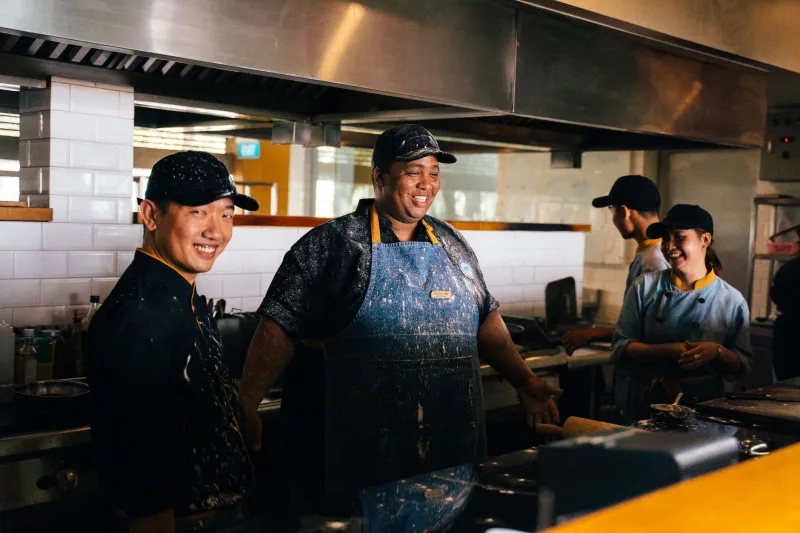
The first thing you learn when you bus tables is how to disappear. Move fast, stay quiet, don't make eye contact with the guests. You are infrastructure. You are the reason the table is clean when the next party sits down. Nobody wonders where you came from or what you're thinking about. That invisibility, it turns out, can be its own kind of education.
For a young immigrant working the floor of a mid-range hotel restaurant in the early 1980s, the dining room was a graduate school he never enrolled in. He watched how the host greeted regulars. He noticed which dishes came back half-finished and which plates were scraped clean. He memorized the timing of a good dinner — the rhythm between courses, the moment a table needed attention before they knew it themselves. He absorbed all of it, night after night, while earning just above minimum wage and sending money home.
His name was not one that American investors would have recognized. His English, early on, was functional at best. His résumé, if he'd had one, would have listed a series of food service jobs stretching back to his arrival — dishwasher, prep cook, busboy, busboy again. What it wouldn't have shown was the running mental ledger he kept of everything the restaurant industry was getting wrong.
The Napkin That Started It All
The story of the napkin has become something of a legend in food industry circles, and like most legends, it's probably been polished at the edges. But the core of it holds up. During a break one evening — sometime in the mid-1980s, in the back corridor of a hotel kitchen, sitting on an overturned milk crate — he pulled out a paper napkin and started writing.
Not doodling. Writing. A business plan, or something close to it: a concept for a fast-casual restaurant that would take the quality of a sit-down dining experience and strip away the overhead that made it inaccessible to ordinary people. Fresh ingredients. Limited menu. Efficient service. A space that felt like somewhere, not just somewhere to eat.
The idea wasn't entirely new. But the specificity of it was. Because he hadn't dreamed this up from a business school case study or a magazine profile of a successful restaurateur. He had watched it fail, night after night, from the floor. He knew exactly which corners the industry cut that customers actually noticed, and which expensive flourishes they didn't care about at all.
He folded the napkin. He put it in his pocket. He went back to work.
Every Door That Closed
The years between that napkin and his first restaurant were not a montage of near-misses and charming setbacks. They were long, grinding, and frequently humiliating. Banks didn't return his calls. The ones that did pointed, with varying degrees of politeness, to his lack of collateral, his immigration status, his absence of formal business training. One loan officer, he later recalled, asked him — without apparent irony — whether he had considered staying in food service.
He had considered it. He had also considered the fact that the people who owned the restaurants where he worked had not, in most cases, started out knowing more than he did. They had started out with money. That was the difference he kept bumping into, and the one he was most determined to work around.
He pooled savings. He borrowed from relatives. He found a small commercial space in a neighborhood that no one in the industry considered promising, which meant the rent was something he could actually pay. He opened with a menu he'd refined over years of watching what sold and what didn't. He ran the kitchen, the floor, and the books himself for the first two years.
The restaurant didn't explode. It grew slowly, steadily, the way things grow when they're built right. Word spread through the neighborhood, then beyond it. A local paper ran a small item. Then a bigger paper. Then something shifted.
What Proximity Teaches
There's a version of this story that frames the busboy background as a charming origin detail — the humble beginning that makes the success more cinematic. But that reading misses the point entirely. The years on the floor weren't a prelude to the education. They were the education.
He understood food costs because he'd seen what happened when they were ignored. He understood customer experience because he'd been the invisible person making it happen, or failing to. He understood the difference between a restaurant that felt like a business and one that felt like a place, because he'd worked in both and watched which ones lasted.
By the time he was sitting across from investors — real ones, with real capital — he didn't need to sell a vision. He could walk them through the operational logic of every decision he'd made. He could explain the margin on every item on the menu. He had data that most restaurant founders don't accumulate until their fifth or sixth location, because he'd been collecting it, informally, for a decade before he opened his first.
The empire that followed — multiple concepts, hundreds of locations, a brand presence that American diners now navigate without thinking about it — didn't come from a flash of inspiration. It came from years of paying attention in a room where nobody expected him to be paying attention.
The Lesson the Industry Still Hasn't Learned
The restaurant business has a long tradition of celebrating the chef-founder, the culinary visionary, the person who reinvented what a meal could be. What it's less good at celebrating is the person who figured out, from the ground up, how a dining room actually works — and used that knowledge to build something that lasts.
His story sits in that second category. Not a prodigy. Not a disruptor. Someone who spent years in the least glamorous corner of an industry, watching and thinking and waiting for the moment when what he'd learned would be worth something.
The napkin, he said once in an interview, wasn't the beginning. It was just the first time he wrote it down.
The beginning was the first night he showed up to work and started paying attention.