The Ones Nobody Noticed: How Background Workers Cracked the Cases That Stumped the Experts
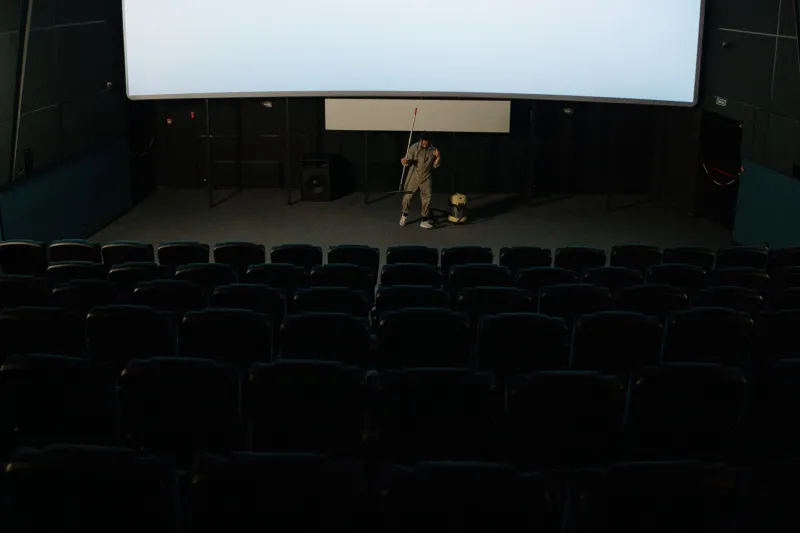
There's a certain kind of genius that doesn't come with a diploma or a corner office. It comes with a mop handle, a graveyard shift, or a maintenance cart rattling down a corridor at 2 a.m. It comes from watching — really watching — the same room, the same machine, the same problem, day after day, while the credentialed experts breeze through on their way to somewhere more important.
History is full of moments when the person nobody was paying attention to turned out to be the one paying the most attention. These are some of those moments.
The Hospital Janitor Who Spotted What the Surgeons Missed
In the mid-1980s, a custodian at a large urban hospital in the Midwest noticed something that had apparently escaped every doctor, nurse, and administrator on staff: the rate of post-surgical infections seemed to spike on weeks when a particular cleaning solution ran low and staff substituted a different brand. He mentioned it — quietly, almost apologetically — to a floor nurse. She passed it along. An infection control specialist investigated.
He was right.
The substitute product, cheaper and more readily available, was leaving a residue on certain surfaces that compromised the sterile field in two of the operating suites. The hospital quietly changed its procurement policy. Nobody held a press conference. The janitor's name never appeared in any report. But the infections stopped.
This kind of story repeats across industries with striking regularity. The pattern is almost always the same: proximity plus attention, multiplied by the willingness to speak up despite having no institutional authority to do so.
John Snow's Overlooked Parallel: The Pump Handle and the People Who Pumped It
Most people know the story of John Snow, the London physician who traced an 1854 cholera outbreak to a contaminated water pump on Broad Street. What gets mentioned less often is that Snow's crucial early tip came from local residents — working-class Londoners who had already noticed that people who drank from that particular pump kept getting sick. They weren't scientists. They were neighbors. They knew their block the way Snow never could.
Snow got the credit, and deserved much of it — his methodology was genuinely revolutionary. But the intelligence that pointed him in the right direction came from people who had no stake in the theory, no reputation to protect, and nothing to prove. They just knew what they'd seen.
The lesson wasn't lost on later public health researchers. Community health workers — often locals with no formal medical training — became a cornerstone of outbreak detection in the 20th century precisely because they see things that visiting experts don't.
The Night-Shift Worker and the Challenger Disaster
The Space Shuttle Challenger tragedy in January 1986 remains one of the most devastating engineering failures in American history. What's less widely known is how many warnings existed before launch — and who some of those warnings came from.
Roger Boisjoly, an engineer at Morton Thiokol, is the figure most often cited for raising alarms about the O-rings in cold temperatures. But scattered throughout the investigative record are accounts of technicians and assembly workers — people with hands-on experience with the physical hardware — who had flagged concerns about seal behavior in low temperatures through informal channels that never made it up the chain.
They weren't ignored out of malice. They were ignored because the system had no mechanism for taking their observations seriously. Their job was to build the thing, not evaluate the risk. That distinction — between doing and knowing — turned out to be a catastrophic blind spot.
The Shipping Clerk Who Accidentally Invented a Better Supply Chain
In the 1950s, a shipping clerk at a mid-sized manufacturing plant in Ohio kept a personal notebook tracking delivery delays. It wasn't his job. His job was to process paperwork. But the delays frustrated him, and he started jotting down patterns — which suppliers were consistently late, which routes caused bottlenecks, which weather conditions seemed to trigger problems.
After two years, he had a detailed map of the company's logistics vulnerabilities that no manager had ever assembled. When a new operations director came in and asked why the shipping department was perpetually behind, the clerk — nervously, half-expecting to be told to mind his own business — handed over the notebook.
The director spent a week with it. Then he restructured three supplier contracts and rerouted two distribution lines. Costs dropped. Delays nearly disappeared. The clerk got a modest raise and a thank-you.
The notebook, not the credentials, was the thing.
Ignaz Semmelweis and the Nurses Who Already Knew
Ignaz Semmelweis is famous for discovering, in 1847, that doctors who washed their hands between performing autopsies and delivering babies dramatically reduced maternal mortality. What the textbooks tend to gloss over is that midwives — who had been practicing in separate wards from the physicians — had already been maintaining far better hygiene instinctively, and their mortality rates showed it.
They weren't following a theory. They were following common sense and the practical wisdom of their trade. The data was sitting right there in the hospital's own records, in the gap between the midwife ward and the physician ward. Semmelweis saw it. The establishment largely refused to believe him — but the midwives had already been living the answer.
The Factory Floor Tip That Saved a Car Company
In the early days of Toyota's quality revolution, one of the principles that set the company apart was a practice called genchi genbutsu — loosely translated as "go and see for yourself." Toyota's engineers and managers were expected to spend time on the factory floor, not in conference rooms. But the flip side of that philosophy was equally important: the workers on that floor were expected to speak up.
Several of Toyota's most significant early quality improvements came directly from assembly line workers who noticed inefficiencies or defects that engineers hadn't caught in design. One famous example involved a line worker who realized that a particular bolt installation sequence was causing micro-fractures invisible to quality inspection but detectable by feel. He flagged it. The sequence was changed. The defect disappeared.
His name is not in any business school case study. The improvement is.
What All of These Stories Share
The through line here isn't luck, exactly. It's something more specific: sustained, close-range attention to a problem that nobody else was assigned to solve.
Janitors walk every corridor. Night-shift workers see the machine when nobody's watching it perform. Assembly workers touch the parts that engineers only draw. Shipping clerks live inside the delays that executives only read about in quarterly reports.
Credentials confer authority. But authority and knowledge are not the same thing. The people in these stories had no power to implement solutions — and in most cases, no expectation that anyone would listen to them. What they had was proximity, patience, and the willingness to trust what they'd seen with their own eyes.
That, it turns out, is sometimes exactly enough.
The next breakthrough might already be sitting in someone's personal notebook, or rattling around in the head of a custodian who's been watching the same room for three years. The question isn't whether people like that exist. They always do.
The question is whether anyone's listening.