Silenced, Sidelined, and Finally Seen: The Mechanic Who Knew Too Much
There's a particular kind of courage that history rarely applauds in real time. It doesn't look like bravery when it's happening — it looks like stubbornness, or delusion, or just plain bad career sense. For Earl Denton, a rail yard mechanic out of Decatur, Illinois, that courage cost him everything he'd spent twenty years building. And for a long time, it bought him nothing at all.
The story of how Denton came to blow the whistle on systemic brake failures across a major American freight rail network — and how that story was then quietly buried while the reforms he'd demanded were quietly implemented — is the kind of tale that makes you question how many other Dentons are out there. Unremembered. Uncompensated. Technically vindicated but practically invisible.
A Man Who Fixed Things for a Living
Earl Denton wasn't an activist. He wasn't a crusader. He was a mechanic, and a good one — the kind of guy who could diagnose a brake assembly problem by sound alone after enough years on the floor. He'd joined the rail industry in the late 1970s, working his way up from yard laborer to certified inspector at a regional freight operation in the Midwest. By the mid-1980s, he was considered one of the more reliable sets of eyes in his district.
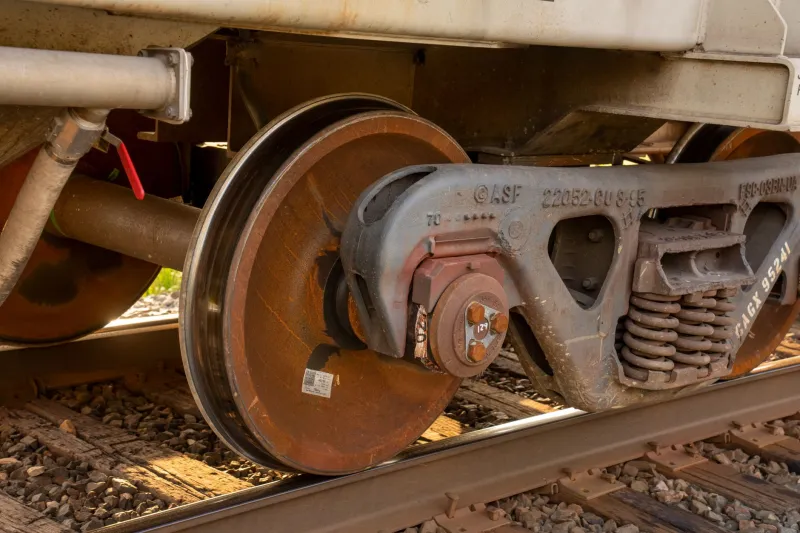
What he started seeing in 1986 disturbed him deeply. Under pressure to cut inspection times and push more freight through on tighter schedules, supervisors were quietly allowing cars with questionable brake components to roll. Not dramatically faulty — nothing so obvious it would get flagged immediately — but worn in ways that accumulated risk over distance and load. Denton documented it. He flagged it through internal channels. He was told, in various polite and not-so-polite ways, to keep moving.
"He used to say the hardest part wasn't finding the problem," his daughter recalled in a 2019 interview with a regional Illinois newspaper. "It was convincing people who already knew about the problem that they had to care."
The Filing That Went Nowhere — And Then Everywhere
In 1988, after two years of internal dead ends, Denton submitted a formal complaint to federal regulators. It was detailed. It named specific car series, specific inspection shortcuts, and specific supervisors who had, in his account, explicitly instructed workers to clear cars they shouldn't have cleared. The complaint cited a near-miss derailment in rural Missouri that had been attributed publicly to track conditions but which Denton believed was brake-related.
The response was swift — just not in the direction he'd hoped. Within four months of filing, Denton was reassigned to a less desirable shift, then written up for minor infractions that colleagues later said were selectively enforced, then let go entirely in a round of what the company called operational restructuring. He filed a wrongful termination complaint. It went nowhere. He hired a lawyer. The lawyer dropped the case after the company produced paperwork that made Denton look, on the surface, like a performance problem rather than a truth-teller.
He spent the better part of the early 1990s doing piecework, driving trucks, and occasionally showing up at congressional offices in Washington with folders full of documentation that staffers accepted politely and apparently filed in the nearest trash can.
The Reforms That Didn't Say His Name
Here's the part that stings most. In 1994, following a series of high-profile freight incidents and a blistering report from the National Transportation Safety Board, Congress pushed through a package of rail safety reforms that included — almost line by line — the kinds of inspection standards and brake component requirements that Denton had been demanding since 1986.
The legislation was praised. The regulators who championed it were praised. The industry groups that had resisted it for years and then suddenly embraced it were praised for their "cooperative spirit." Earl Denton was not mentioned. Not once. Not in the congressional record, not in the press coverage, not in the agency's own summary of how the reforms came to be.
He was 51 years old. He was working at a hardware store in Forsyth, Illinois. He watched the news coverage from a break room TV and reportedly said nothing.
The Box in the Archive
The vindication, when it came, arrived in the least dramatic way imaginable: a graduate student doing dissertation research on labor history and federal regulatory capture. Digging through newly declassified internal agency correspondence from the late 1980s, she found Denton's complaint — the original, annotated copy — alongside internal memos that made clear regulators had not only received it but discussed it seriously before ultimately deciding the political climate wasn't right for action.
One memo, dated 1989, referred to Denton by name and described his documentation as "credible and specific" while recommending no immediate follow-up to avoid "antagonizing industry partners during a sensitive period."
The graduate student's dissertation was published in 2017. It was picked up by a handful of transportation policy blogs and one long piece in a labor-focused magazine. Denton, by then in his mid-seventies, gave one interview. He was gracious. He said he was glad someone had looked.
What Remarkable Odds Looks Like From the Inside
The history of American safety reform is full of Dentons — people who absorbed the cost of being right before the moment was ready. The names we remember are the ones who got lucky with timing, or had the resources to outlast the retaliation, or happened to have a journalist in the right place at the right moment.
Earl Denton had none of that. What he had was documentation, persistence, and the kind of stubborn moral clarity that institutions find deeply inconvenient. He didn't change the industry by being celebrated. He changed it by being too specific and too credible to fully ignore — even when they tried.
The reforms exist. The trains are safer. Somewhere in a declassified archive, his name is attached to the moment when someone in power finally admitted he'd been right all along.
That's not the ending anyone would have written for him. But it's the one that's true.