The Boy Who Couldn't Say His Own Name
In the cafeteria of Archmere Academy in Claymont, Delaware, a skinny kid with thick glasses stood frozen at the lunch counter. The server was waiting for his order, but Joseph Robinette Biden Jr. couldn't get the words out. His mouth opened and closed like a fish gasping for air. Finally, he managed to stammer out "I-I-I'll have a h-h-hamburger," while other students snickered behind him.
It was 1955, and ten-year-old Joe Biden had one of the most severe stutters his teachers had ever encountered. He couldn't say his own name without getting stuck on the hard consonants. Classmates nicknamed him "Dash" because of the way he'd pause mid-sentence, trapped by his own tongue. Some days, he simply wouldn't speak at all.
When Words Become Weapons Against You
The stutter wasn't just an inconvenience—it was social torture. During oral presentations, Biden would stand at the front of the classroom, his face reddening as he struggled to push out even simple words. Teachers would sometimes excuse him from reading aloud, which only made him feel more different, more broken.
At home, his mother Catherine Eugenia "Jean" Biden refused to let her son retreat into silence. "Joey, you're going to be fine," she'd tell him. "You just have to work harder than everyone else." She made him practice reading poetry aloud, believing that rhythm and meter might help him find a flow. His favorite was Yeats, whose Irish cadences seemed to unlock something in his speech patterns.
But it was his father's advice that would prove most prophetic: "It's not how you get knocked down, Joey. It's how fast you get back up."
The Mirror Method
By high school, Biden had developed his own unconventional therapy. He'd stand in front of his bedroom mirror for hours, reciting passages from literature with a pencil clenched between his teeth. The physical obstacle forced him to slow down, to be more deliberate with each syllable.
He discovered that certain techniques worked better than others. Speaking in a lower register helped. So did using hand gestures to create a physical rhythm that his speech could follow. Most importantly, he learned that confidence—even fake confidence—could sometimes override the neurological hiccups that caused his stutter.
Finding Power in Vulnerability
When Biden arrived at the University of Delaware in 1961, something remarkable happened. The young man who'd been terrified of public speaking began volunteering for oral presentations. He joined the debate team, not because he was good at it, but because he was determined to conquer his fear.
 Photo: University of Delaware, via talloiresnetwork.tufts.edu
His debate coach, a professor named Richard Keil, noticed something unusual. When Biden got passionate about a topic—civil rights, Vietnam, social justice—his stutter would almost disappear. The intensity of his conviction seemed to override his speech impediment. "It was like watching someone discover a superpower," Keil later recalled.
The Courtroom Crucible
After law school at Syracuse University, Biden faced his ultimate test: arguing cases in court. For someone with a speech impediment, litigation seemed like career suicide. But Biden had learned something crucial during his years of struggle—preparation could overcome almost any obstacle.
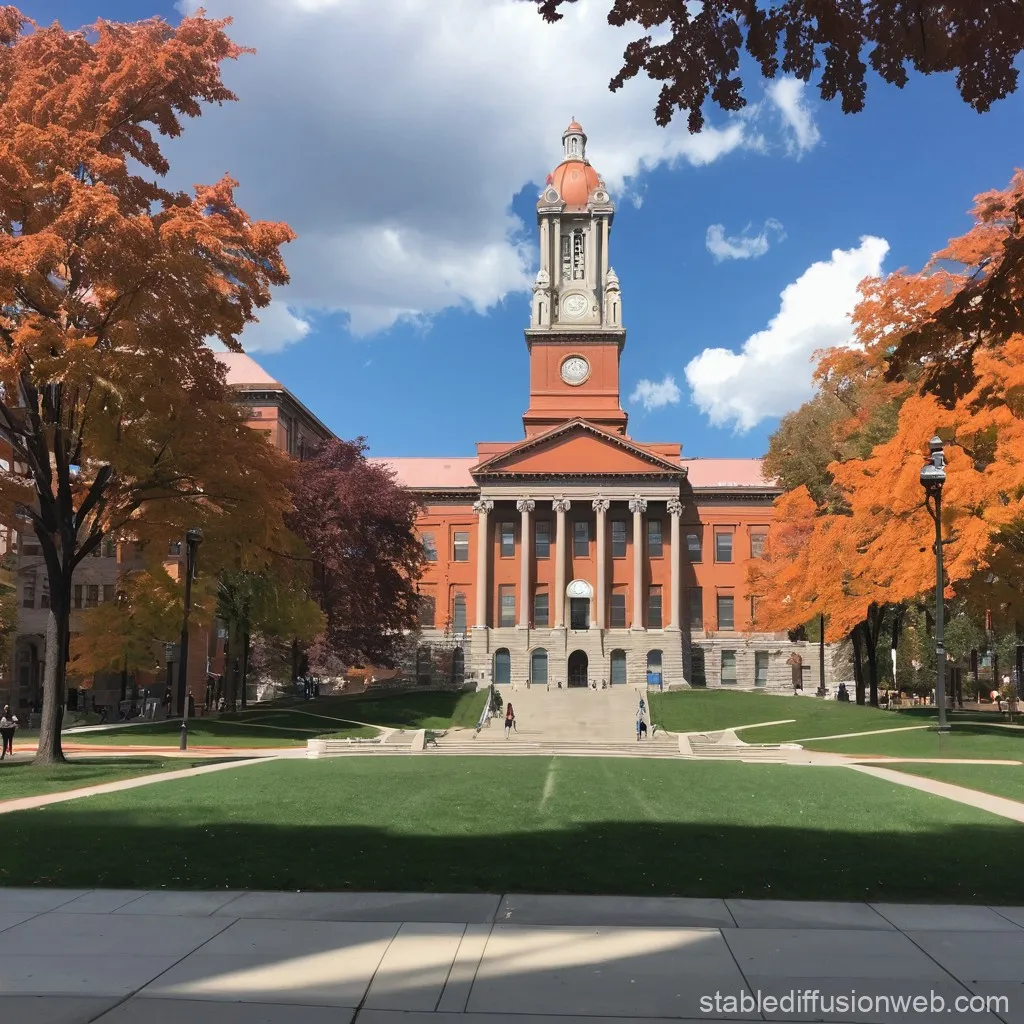 Photo: Syracuse University, via imgcdn.stablediffusionweb.com
He'd rehearse his opening statements dozens of times, memorizing not just the words but the breathing patterns, the pauses, the emphasis. He developed a speaking style that was deliberately slower than most lawyers, with longer pauses between thoughts. What could have been a weakness became his signature strength—juries found his measured delivery more trustworthy than the rapid-fire arguments of his peers.
The Senate Floor: Where Struggle Became Strength
When Biden was elected to the U.S. Senate at age 29, he brought his hard-won speaking techniques to the chamber. His colleagues noticed something different about his oratory style. Where other senators rushed through their remarks, Biden spoke with deliberate pacing. He used repetition not as a rhetorical flourish, but as a way to maintain his rhythm and confidence.
During the Clarence Thomas hearings in 1991, Biden's questioning style—measured, persistent, unrushed—proved particularly effective. The very speech patterns he'd developed to manage his stutter made him a more compelling interrogator than senators with more traditionally polished speaking styles.
The Empathy Advantage
Perhaps most remarkably, Biden's childhood struggle with speech gave him an unusual ability to connect with others facing their own challenges. Throughout his Senate career, he became known for his work with disability rights advocates and for his personal letters to children who stutter.
One mother from Ohio wrote to thank him after her son, who had a severe stutter, watched Biden speak on C-SPAN. "For the first time," she wrote, "my boy saw that someone like him could stand up and be heard."
The Long Arc of Transformation
By the time Biden became Vice President in 2009, few people remembered the stammering boy from Claymont. His speaking style—deliberate, empathetic, occasionally stumbling but always authentic—had become his political trademark. The very vulnerability that once threatened to silence him had become the source of his most powerful communication tool.
Today, speech pathologists study Biden's techniques as a masterclass in stutter management. But perhaps more importantly, his story serves as a reminder that our greatest weaknesses can become our most defining strengths—if we're willing to do the work to transform them.
The boy who couldn't say his own name grew up to have one of the most recognizable voices in American politics. Not despite his stutter, but because of everything it taught him about persistence, preparation, and the power of refusing to stay silent.