The Manuscript That Wouldn't Die: How 77 Rejections Led to Literary History
The Drawer of Dreams
In a cramped apartment above a Chicago laundromat, Maria Santos kept a shoebox under her bed. Not for shoes, but for rejection letters. By 1987, that box held 77 identical messages, each one a polite variation of the same theme: "While your writing shows promise, stories about immigrant families simply don't have commercial appeal in today's market."
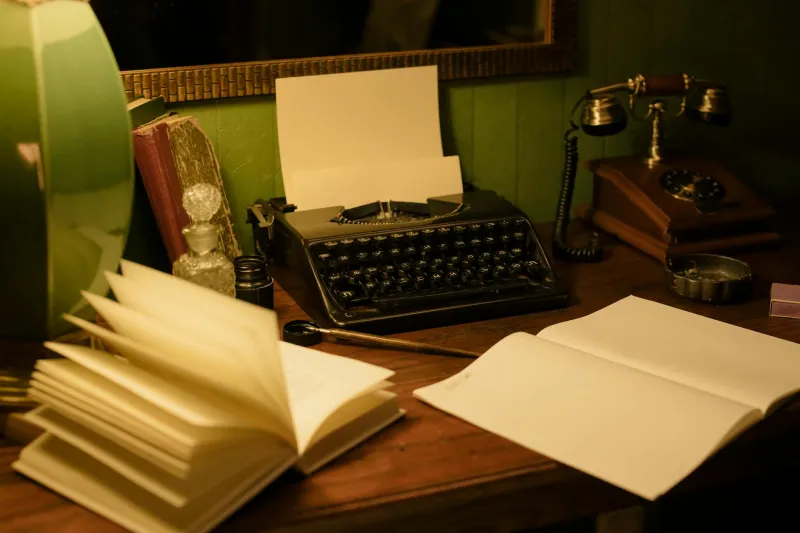
She'd started writing the novel in 1969, stealing moments between her shifts as a seamstress and raising three children alone. The story wasn't glamorous—it followed three generations of a Mexican-American family navigating life in East Los Angeles, told in a voice that switched between English and Spanish the way her own family spoke around the dinner table.
"Nobody wants to read about people like us," her sister would say, not unkindly, watching Maria hunched over her typewriter at 2 AM. "Why don't you write something... you know, more American?"
But Maria couldn't write about anyone else. These were the only stories she knew.
The Long Game
What rejection number 23 looked like: a form letter from a major New York publisher, unsigned, suggesting she "consider writing in a more universal voice that broader audiences can relate to." What it felt like: a small death, followed by three days of not touching the typewriter, followed by Maria pulling it back out and typing the same query letter to the next name on her list.
This wasn't the romantic struggle of the starving artist. Maria worked full-time, sometimes two jobs, to keep her family afloat. Writing happened in the margins—during lunch breaks, after her children fell asleep, on Sundays when the laundromat below was finally quiet. She'd revise the same chapters dozens of times, teaching herself craft through library books and sheer repetition.
"I wasn't trying to be noble," she'd later tell interviewers. "I was just too stubborn to quit."
By rejection 40, she'd memorized the patterns. Large publishers rarely responded at all. Small presses were kinder but equally firm: beautiful writing, important story, no market. University presses suggested she try academic journals. Literary magazines praised her "authentic voice" but couldn't commit to publishing "niche" work.
The Invisible Market
What those 77 editors couldn't see was that Maria's "niche" was actually a massive, underserved audience. Millions of Americans were living bicultural lives, code-switching between languages, navigating the space between their parents' traditions and their children's futures. They were reading, but they weren't seeing themselves reflected in American literature.
Maria knew this because she lived it. At the grocery store, at parent-teacher conferences, at church—everywhere she went, she met people hungry for stories that felt familiar. But the publishing industry in the 1970s and 80s operated on a narrow definition of "universal" that somehow excluded the experiences of America's fastest-growing communities.
"They kept telling me to make it more relatable," Maria recalled. "As if love and loss and family only counted when they happened in English."
The 78th Time
Rejection 77 came from a small press in Texas that had seemed promising—they'd actually requested the full manuscript. The editor's response was longer than usual, almost apologetic: "Your novel is beautifully written and deeply moving. Unfortunately, our marketing department doesn't believe we can reach enough readers to make publication viable."
Maria almost didn't send out number 78. The manuscript had been sitting in her drawer for three months when she spotted a tiny listing in Publishers Weekly: a new imprint launching with a mission to publish "voices that reflect America's true diversity."
She mailed the query on a Thursday. By the following Tuesday, an editor named Jennifer Walsh was calling to request the full manuscript. By Friday, Walsh was calling again with an offer.
When the Floodgates Opened
Between Two Worlds hit bookstores in September 1988 with a modest first printing of 5,000 copies. Within six weeks, it had sold out and gone back to press. Within six months, it was being taught in college courses and optioned for film rights. Within a year, Maria Santos had won the National Book Award.
But the real victory wasn't the award or the bestseller lists. It was the letters that poured in from readers who'd never seen their own families reflected in literature before. Letters from second-generation immigrants, from parents trying to preserve traditions, from children caught between worlds.
"Finally," one reader wrote, "a book that sounds like my kitchen table."
The Aftermath
Maria's success didn't just change her life—it changed an industry. Publishers who had passed on her manuscript suddenly found themselves scrambling to acquire similar voices. The "niche" market they'd dismissed was actually a goldmine waiting to be tapped.
Today, multicultural literature is a thriving genre, and Maria Santos is credited as one of its pioneers. But she's quick to point out that she wasn't trying to break barriers or make history. She was just trying to tell the truth about the world she knew.
"I kept that shoebox for years," she says now, laughing. "All those rejection letters. I finally threw them out when I moved to a bigger apartment—one without a laundromat downstairs. But sometimes I wonder if I should have kept them, just to remind myself that the 78th time isn't magic. It's just the time when someone finally gets it."
In an industry built on hunches about what readers want, Maria Santos proved that sometimes the most radical act is simply refusing to disappear. Her story reminds us that persistence isn't glamorous—it's mostly just showing up, again and again, until the world catches up to what you've known all along.