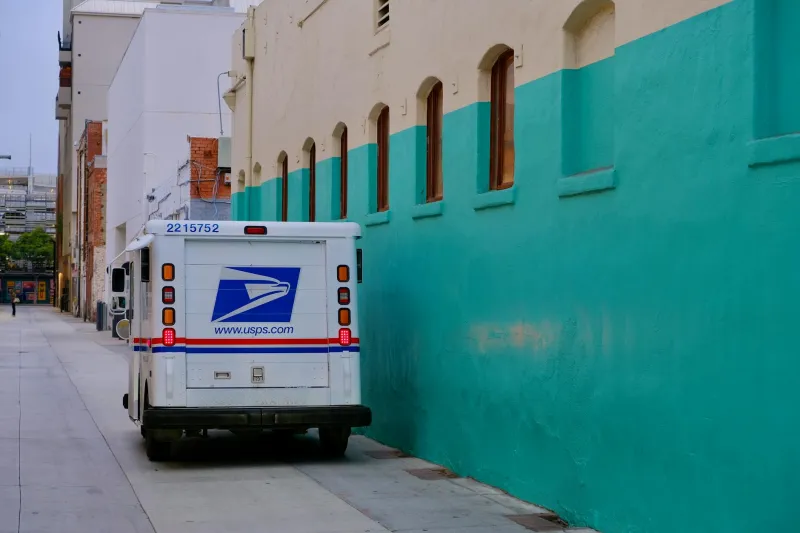
The Mailman's Mistake That Built a Billion-Dollar Empire
On a humid Tuesday morning in Memphis in 1951, postal carrier Eddie Thompson was running behind schedule. His mail bag was heavy, his route was long, and he was eager to finish before the afternoon heat became unbearable. When he reached the letter addressed to "Wallace Johnson Construction," he made a quick decision that would reshape American business history.
Instead of delivering it to the construction company across town, Thompson dropped it in the mailbox of Wallace Johnson, a 38-year-old insurance salesman who lived on the same street. It was the kind of mistake that happens thousands of times every day across America—except this time, the wrong Wallace Johnson opened the letter and discovered an opportunity that would make him one of the richest men in the country.
The Letter That Changed Everything
Wallace Johnson was struggling. His insurance business was barely keeping his family afloat, and he was looking for ways to supplement his income. When he opened the misdirected letter, he found a request for construction bids on a small motel project in downtown Memphis.
Most people would have walked the letter over to the intended recipient. Johnson had a different idea.
"I figured if the mail brought it to me, maybe it was meant for me," Johnson would later tell reporters. "Besides, how hard could building a motel be?"
The answer, as Johnson quickly discovered, was very hard. He had no construction experience, no crew, and no real understanding of the hospitality business. What he did have was the audacity to bid on a project he was completely unqualified to handle—and somehow, he won the contract.
The Accidental Contractor
Johnson's first construction project was a disaster. He hired day laborers from downtown Memphis, bought materials he didn't fully understand, and learned carpentry by trial and error. The small motel that should have taken three months to build stretched into eight months of setbacks, cost overruns, and near-constant crisis management.
"Every day brought a new catastrophe," Johnson recalled. "Pipes burst, walls fell down, and I had no idea what I was doing. But somehow, we kept going."
The experience taught Johnson valuable lessons about construction, but more importantly, it introduced him to the hotel business. As he worked on the project, he noticed something that other developers were missing: American families were starting to travel more, but the available accommodations were either too expensive or too unreliable.
Most hotels in the 1950s catered to business travelers or wealthy vacationers. Families driving cross-country often had to settle for dingy motor lodges or expensive downtown hotels that weren't designed for children. Johnson saw an opportunity to create something in between—clean, affordable, family-friendly accommodations along America's growing highway system.
The Partnership That Almost Wasn't
Johnson's vision might have remained just that—a vision—if not for another stroke of accidental fortune. While working on his second construction project (this time, a project he had legitimately bid on), he met Kemmons Wilson, a local real estate developer who was equally frustrated with America's lodging options.
Wilson had recently returned from a family vacation to Washington, D.C., where he had been shocked by the poor quality and high cost of roadside accommodations. He was planning to build a chain of family-friendly motels but lacked construction experience.
Johnson, meanwhile, had stumbled into construction expertise but lacked the capital and business acumen to scale his operations. Their meeting was supposed to be about a small construction contract, but it became the foundation of one of America's most successful business partnerships.
The Name That Almost Wasn't
The partners originally planned to call their motel chain "Wilson's Courts," but a trademark search revealed the name was already taken. Sitting in Wilson's office, brainstorming alternatives, they were interrupted by Wilson's secretary, who was watching the 1942 movie "Holiday Inn" starring Bing Crosby on a small television in the corner.
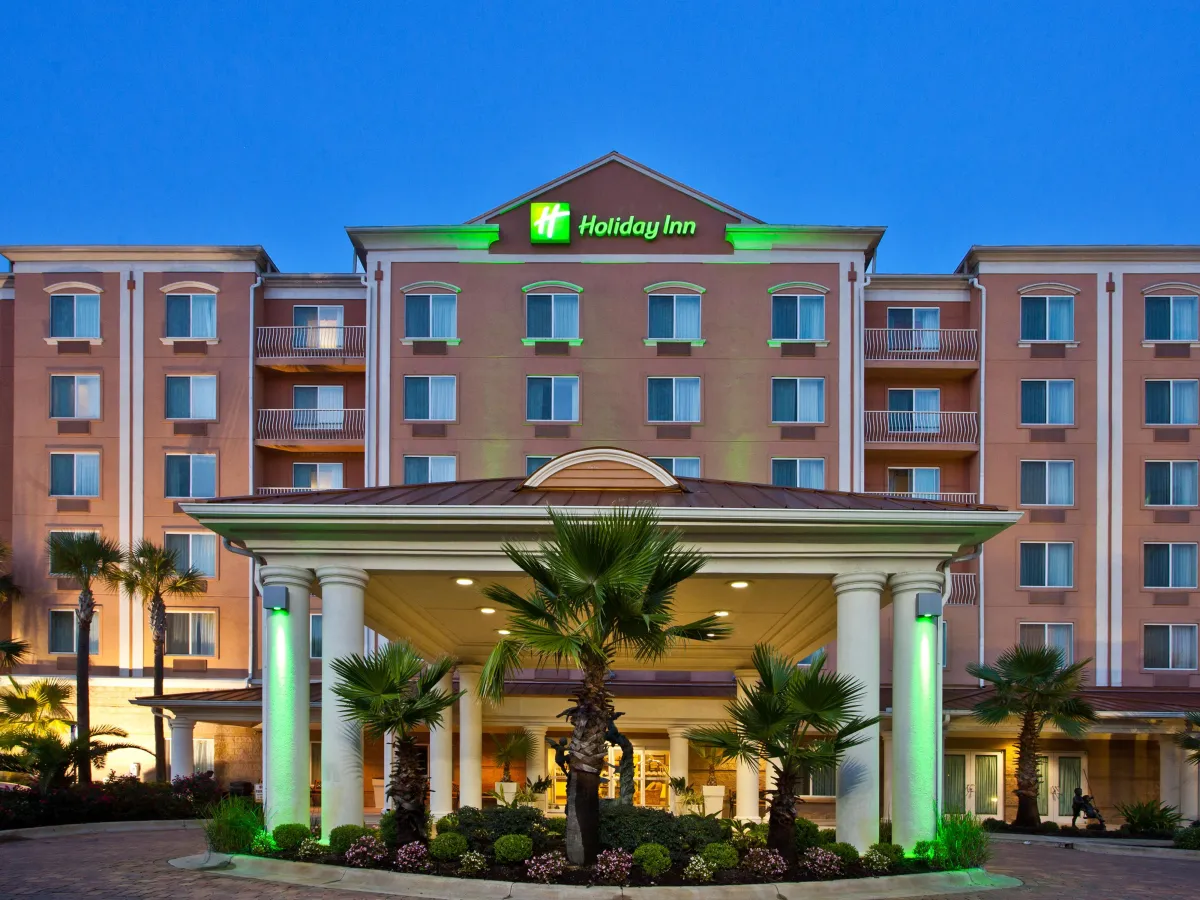 Photo: Holiday Inn, via ihg.scene7.com
"Why don't you call it Holiday Inn?" she suggested during a commercial break.
Wilson and Johnson looked at each other and shrugged. They needed a name, and this one was available. Neither man realized they were naming what would become the world's largest hotel chain.
The Formula That Worked
The first Holiday Inn opened in Memphis in 1952, and it was an immediate success. Johnson and Wilson had created something that hadn't existed before: a standardized, reliable, family-friendly lodging experience that travelers could count on regardless of location.
Every Holiday Inn featured the same amenities: air conditioning, a swimming pool, free parking, and a restaurant. Rooms were identical across locations, so families knew exactly what to expect. Prices were reasonable, and children stayed free.
The concept was revolutionary. Before Holiday Inn, travelers had no way of knowing what they would find when they pulled into a roadside motel. Johnson and Wilson's standardization model eliminated that uncertainty, creating brand loyalty among American families.
The Franchise Revolution
Johnson's construction background proved crucial as the company expanded. Unlike other hotel chains that built and operated their own properties, Holiday Inn developed a franchise model that allowed local entrepreneurs to build and operate hotels using the Holiday Inn brand and standards.
Johnson personally inspected every new location, ensuring that construction quality met company standards. His experience as an accidental contractor had taught him to spot problems before they became expensive mistakes.
By 1960, there were 100 Holiday Inns across America. By 1970, there were more than 1,000. The company went public in 1962, making Johnson and Wilson multimillionaires.
The Empire That Grew
Holiday Inn's success spawned an entire industry. The company pioneered the use of computerized reservation systems, allowing travelers to book rooms at distant locations from any Holiday Inn. They introduced the concept of frequent traveler programs and standardized hotel amenities that are now taken for granted.
Johnson, the accidental construction worker, became one of Memphis's most prominent businessmen. He used his wealth to develop shopping centers, office buildings, and residential communities across the South. The Holiday Inn empire eventually included restaurants, cruise ships, and even a casino in Las Vegas.
The Lesson in the Mistake
Wallace Johnson's story illustrates a profound truth about American entrepreneurship: sometimes the best opportunities come disguised as accidents. The misdirected letter that started his journey wasn't just a postal error—it was a reminder that preparation meets opportunity in unexpected ways.
Johnson was ready to act when chance presented itself. His willingness to bid on a construction project he wasn't qualified for, his openness to learning new skills under pressure, and his recognition of an unmet market need all positioned him to capitalize on what could have been just another mail delivery mistake.
The Ripple Effect
The postal error that created Holiday Inn had consequences far beyond Johnson's personal fortune. The company's success helped standardize American travel, making family vacations more accessible and predictable. The franchise model that Johnson and Wilson perfected became the template for countless other businesses, from fast food to retail.
Today, there are more than 3,000 Holiday Inn properties worldwide, serving millions of travelers annually. Every time a family checks into a clean, affordable hotel room, they're benefiting from a business model that began with a mailman's simple mistake on a hot Tuesday morning in Memphis.
Wallace Johnson died in 1988, worth an estimated $500 million. His obituary mentioned his insurance career, his construction business, and his role in building the Holiday Inn empire. It didn't mention the misdirected letter that started it all—but perhaps that's fitting. Sometimes the most remarkable odds aren't about the accidents that happen to us, but about our readiness to recognize opportunity when it arrives in our mailbox, even if it was meant for someone else.