
Stephanie Kwolek stood outside the U.S. Patent Office in 1965, clutching a manila folder that contained what she believed was revolutionary. The 42-year-old chemist had spent months perfecting her application, writing and rewriting technical descriptions in her second language. Inside that folder was a formula for something that seemed impossible: a fiber five times stronger than steel by weight, yet light enough to weave into fabric.
 Photo: U.S. Patent Office, via jonesrobb.com
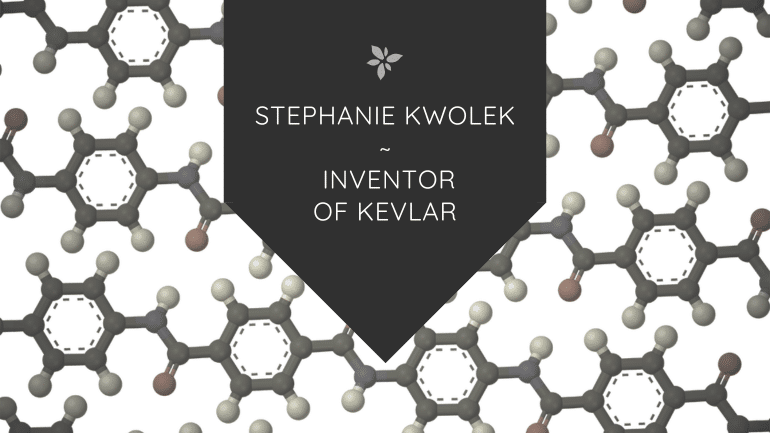 Photo: Stephanie Kwolek, via amazingwomeninhistory.com
The patent clerks looked skeptical. Here was a woman with a Polish accent, claiming she'd invented a "miracle fiber" in a DuPont laboratory. Her English, though functional, carried the rhythms of her childhood in New Kensington, Pennsylvania, where Polish was spoken as often as English. But Stephanie Kwolek had learned something crucial during her immigrant childhood: when people doubt you, you don't argue—you prove them wrong.
The Accidental Discovery That Wasn't Accidental
Kwolek's journey to that patent office began with what appeared to be a mistake. In 1964, while researching lightweight fibers for automobile tires, she created a solution that looked completely wrong. Instead of the clear, thick liquid she expected, her beaker contained a cloudy, thin mixture that her colleagues assumed was contaminated.
"Everyone told me to throw it away," Kwolek would later recall. "It looked like a failed experiment."
But Kwolek's immigrant upbringing had taught her to waste nothing. Her parents, who had arrived from Poland with little more than hope, had instilled in her a respect for resources and a suspicion of easy answers. While other chemists might have discarded the unusual solution, Kwolek insisted on testing it.
The technician responsible for spinning fibers initially refused to process her "cloudy mess," fearing it would clog his expensive equipment. Kwolek persisted, using a combination of scientific reasoning and sheer determination that her colleagues would later describe as "typically Stephanie."
When the fiber finally emerged from the spinneret, it possessed properties that defied conventional wisdom. It was stronger than nylon, more heat-resistant than other synthetic materials, and lighter than anyone had thought possible.
The Language Barrier That Nearly Buried a Breakthrough
Translating her discovery into patent language proved more challenging than the chemistry itself. Technical patents require precise terminology and specific phrasing that can make or break an application. Kwolek's English, while proficient, sometimes failed to capture the nuances of her scientific breakthrough.
"I would write a sentence, then rewrite it five times," she remembered. "The words had to be exactly right, not just close."
She spent evenings at her kitchen table with technical dictionaries and chemistry textbooks, crafting descriptions that would satisfy both patent lawyers and skeptical reviewers. Her neighbors in Wilmington, Delaware, grew accustomed to seeing her light burning late into the night as she perfected her application.
The process was made more difficult by the revolutionary nature of her invention. Patent examiners were familiar with incremental improvements to existing fibers, but Kwolek was proposing something entirely new. Her polymer chains were arranged in a way that had never been achieved before, creating strength through a mechanism that challenged existing theories.
The Patent Office Interrogation
When Kwolek finally submitted her application, the patent office response was swift and skeptical. Examiners questioned whether her results were reproducible, whether her testing methods were valid, and whether her claims were even theoretically possible.
"They asked me to prove everything twice," Kwolek said. "Then they asked me to prove it again."
The interrogation process stretched for months. Patent examiners, most of whom had never encountered a female chemist, peppered her with technical questions that seemed designed to expose weaknesses in her application. Kwolek responded with additional data, revised explanations, and unwavering confidence in her work.
Her breakthrough came during an in-person meeting when she brought samples of her fiber to the patent office. Watching the thin strand support weights that would snap conventional materials convinced skeptics that her claims weren't just theoretical.
The Fiber That Saved Lives
U.S. Patent 3,287,323 was granted to Stephanie Kwolek on November 22, 1966. The fiber she had invented was eventually trademarked as Kevlar, and its applications quickly expanded far beyond automobile tires.
The first major use came during the Vietnam War, when Kevlar was incorporated into flak jackets for American soldiers. The same material that Kwolek had discovered in a cloudy laboratory solution was now stopping bullets and saving lives.
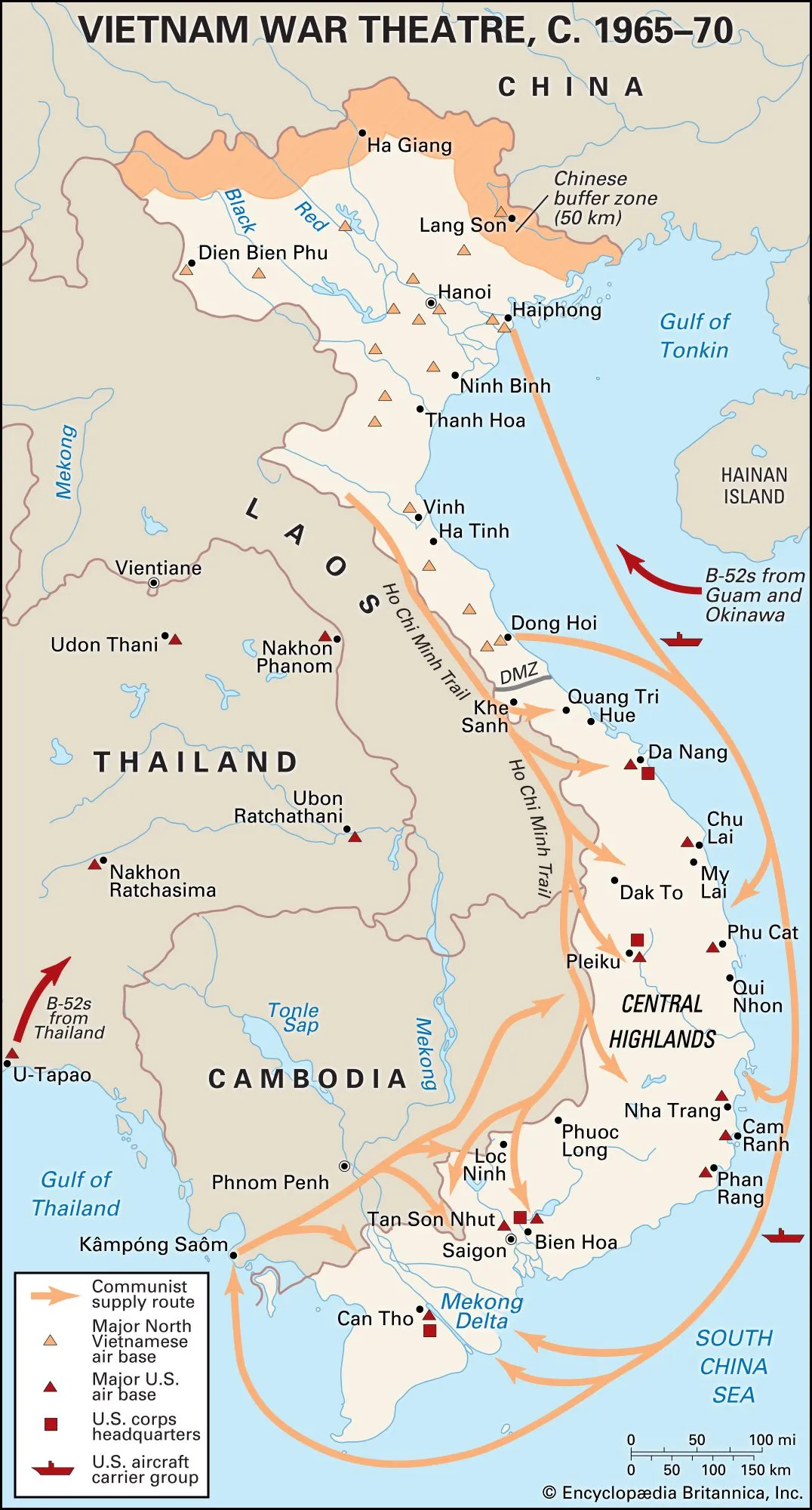 Photo: Vietnam War, via cdn.britannica.com
By the 1970s, Kevlar had found its way into police bulletproof vests, dramatically reducing officer fatalities. Firefighters began wearing Kevlar suits that could withstand extreme temperatures. The material became essential in aerospace applications, where its strength-to-weight ratio made it invaluable for spacecraft construction.
Beyond the Headlines
What made Kwolek's achievement remarkable wasn't just the invention itself, but the persistence required to bring it to market. As a woman in a male-dominated field, an immigrant in an industry that valued conformity, and a chemist proposing something that seemed impossible, she faced skepticism at every turn.
Her colleagues at DuPont later admitted that they initially viewed her work with suspicion. "We thought she was chasing a fantasy," one former coworker recalled. "Stephanie proved that sometimes fantasies are just realities that nobody has discovered yet."
The commercial success of Kevlar transformed DuPont into a leader in advanced materials, generating billions in revenue over the following decades. But for Kwolek, the true measure of success wasn't financial—it was the letters she received from police officers and soldiers whose lives had been saved by her invention.
The Lasting Impact
Today, Kevlar is woven into the fabric of American life in ways that most people never realize. It strengthens the cables in suspension bridges, reinforces the hulls of boats, and provides cut-resistance in kitchen gloves. Every time someone puts on a bulletproof vest, rides in a modern aircraft, or uses a smartphone (Kevlar provides strength in fiber optic cables), they're benefiting from Stephanie Kwolek's refusal to throw away a "failed" experiment.
Kwolek retired from DuPont in 1986, holding 17 patents and having revolutionized materials science. She was inducted into the National Inventors Hall of Fame and received the National Medal of Technology, becoming one of the few women to achieve such recognition in her field.
The Lesson in the Language Barrier
Kwolek's story illustrates something profound about innovation in America. Her accented English and immigrant perspective weren't obstacles to overcome—they were advantages that helped her see possibilities that others missed. Her willingness to question conventional wisdom, combined with the persistence learned from her immigrant parents, enabled her to pursue discoveries that more "qualified" researchers might have abandoned.
The patent application that began with broken English and faced institutional skepticism became one of the most licensed inventions in American history. Sometimes the most remarkable odds aren't about overcoming barriers—they're about transforming those barriers into breakthroughs that change the world.