Clearing Tables, Capturing Tastes: How America's Most Feared Food Critic Started in the Kitchen's Shadow
Clearing Tables, Capturing Tastes: How America's Most Feared Food Critic Started in the Kitchen's Shadow
The dinner rush at Le Bernardin was in full swing when Miguel Santos noticed the woman at table twelve sending back her third course. He'd been clearing tables at the Manhattan institution for almost five years, and he'd learned to read the subtle language of disappointed diners. The way she pushed the fish around her plate. The polite but firm gesture toward the server. The apologetic smile that didn't reach her eyes.
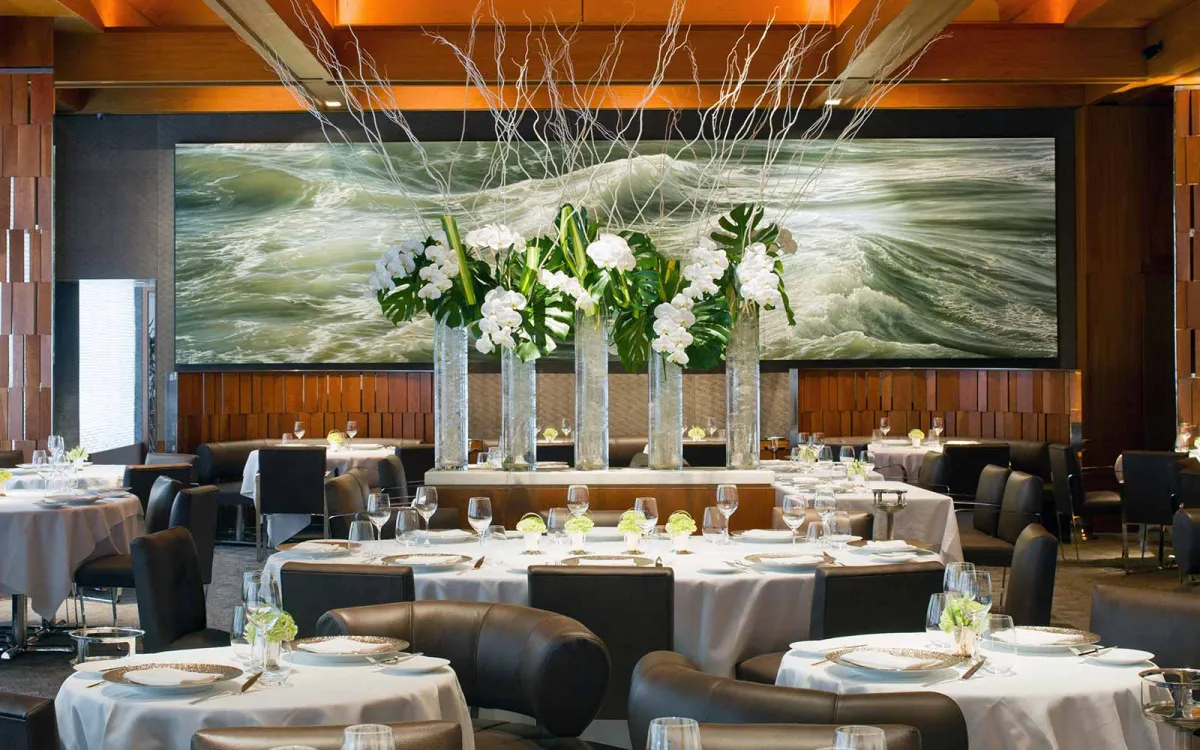 Photo: Le Bernardin, via www.le-bernardin.com
Most busboys would have simply cleared the rejected dish and moved on. Santos did something different. He lingered, memorizing every detail of what went wrong.
The Education of an Accidental Expert
Santos had arrived in New York from Guatemala in 1987 with $200 in his pocket and exactly three words of English: "please," "thank you," and "bathroom." The restaurant job was supposed to be temporary—just long enough to save money for community college. Instead, it became his graduate school.
Night after night, he watched the theater of fine dining unfold from the margins. He observed how certain preparations made customers lean forward with anticipation, how others prompted that telltale pause before the first bite. He noticed which wines made people close their eyes in satisfaction and which left glasses barely touched.
"I was invisible," Santos would later write. "But invisible people see everything."
While clearing tables, he began mentally cataloging flavors, techniques, and reactions. He studied the way sauces pooled on plates, how different cuts of meat responded to various cooking methods, why some desserts left customers lingering over empty plates while others were abandoned half-finished.
The other staff thought he was odd. Who memorizes the exact temperature of a perfect medium-rare steak when you're earning minimum wage to clean up after other people's meals?
The Conversation That Changed Everything
In 1994, Santos was working a private event when he overheard two men debating the merits of the evening's menu. One was praising the chef's "innovative approach to classical French technique." The other was less impressed.
"Innovation?" the skeptic said. "This is just expensive food trying too hard to be art."
Santos couldn't help himself. In his still-accented English, he quietly interjected: "The duck is overcooked. The sauce, it tries to hide this, but it cannot."
Both men turned. The skeptic smiled. "And you know this how?"
"I watch. Seven years, I watch."
The man introduced himself as James Morrison, food editor at New York Magazine. The conversation that followed lasted three hours and ended with Morrison offering Santos a trial assignment: review three restaurants, anonymously, from the perspective of someone who'd seen fine dining from both sides of the service equation.
 Photo: New York Magazine, via logodix.com
The Voice Nobody Expected
Santos's first review ran without fanfare in a back section of the magazine. It was unlike anything readers had seen before. Where other critics focused on pedigree and presentation, Santos wrote about the human moments that revealed a restaurant's true character.
He described how servers' shoulders tensed when customers ordered certain dishes—a telltale sign of kitchen problems. He noted when busboys moved efficiently versus when they seemed confused by the layout—evidence of either good or poor management. He could detect when ingredients weren't at their peak because he'd seen the subtle differences in how kitchen staff handled them.
"Santos doesn't just taste food," Morrison observed. "He reads restaurants like crime scenes."
The response was immediate and polarizing. Established food critics dismissed him as an amateur. Restaurant owners feared his unconventional insights. But readers were captivated by reviews that felt honest in a way they'd never experienced.
Redefining the Rules
Within two years, Santos had become New York Magazine's lead food critic. His background gave him credibility with both kitchen staff and diners who felt alienated by traditional food writing's insider language and assumptions.
He championed hole-in-the-wall establishments that other critics ignored, not out of reverse snobbery, but because his trained eye could recognize excellent technique regardless of the setting. He was equally willing to pan celebrated restaurants when their execution didn't match their reputation.
"A $40 pasta dish that disappoints is worse than a $12 pasta dish that surprises," became one of his signature observations.
Santos also revolutionized restaurant criticism by writing about the complete dining experience. He considered how servers were treated by management, whether kitchen staff seemed stressed or confident, how efficiently the operation ran during peak hours. His reviews became ethnographies of American dining culture.
The Outsider's Advantage
What made Santos exceptional wasn't just his palate—it was his perspective. Having spent years in service positions, he understood restaurants as workplaces, not just stages for culinary performance. He could spot the difference between a kitchen running on passion and one running on ego.
His immigrant background also gave him a unique lens on American food culture. He wrote perceptively about how restaurants reflected changing demographics, economic pressures, and cultural tensions. His reviews became required reading not just for diners, but for sociologists studying contemporary American life.
"Miguel sees what we miss because we're too close to it," Morrison explained. "He's still amazed by things we take for granted, still critical of things we've learned to accept."
Legacy of the Unlikely Expert
Santos went on to write three bestselling books about American dining culture and won two James Beard Awards for food writing. But he never forgot his years clearing tables.
"Every night, I learned something," he reflected years later. "Not just about food, but about people. About what makes them happy, what disappoints them, what they're really looking for when they sit down to eat."
His career proved that expertise doesn't always come from formal training or insider access. Sometimes the most valuable insights come from the margins, from people who've learned to watch carefully because they couldn't take anything for granted.
In a industry built on exclusivity and insider knowledge, Santos succeeded by remembering what it felt like to be on the outside looking in. His remarkable odds? That the perspective everyone overlooked would become the voice everyone trusted.