He Lost His Arm in a Canyon. He Says It Was the Best Day of His Life.
He Lost His Arm in a Canyon. He Says It Was the Best Day of His Life.
Most people plan their vacations. Aron Ralston just went.
On April 26, 2003, the 27-year-old mechanical engineer-turned-outdoor-enthusiast headed into Canyonlands National Park in southeastern Utah without telling a single person where he was going. He'd done it dozens of times before. He was the kind of guy who'd already climbed 49 of Colorado's 54 fourteeners — the peaks that top 14,000 feet — in winter, solo. Risk wasn't something Ralston avoided. It was something he collected.
Then a canyon wall handed him a risk he hadn't planned for.
The Weight of 800 Pounds
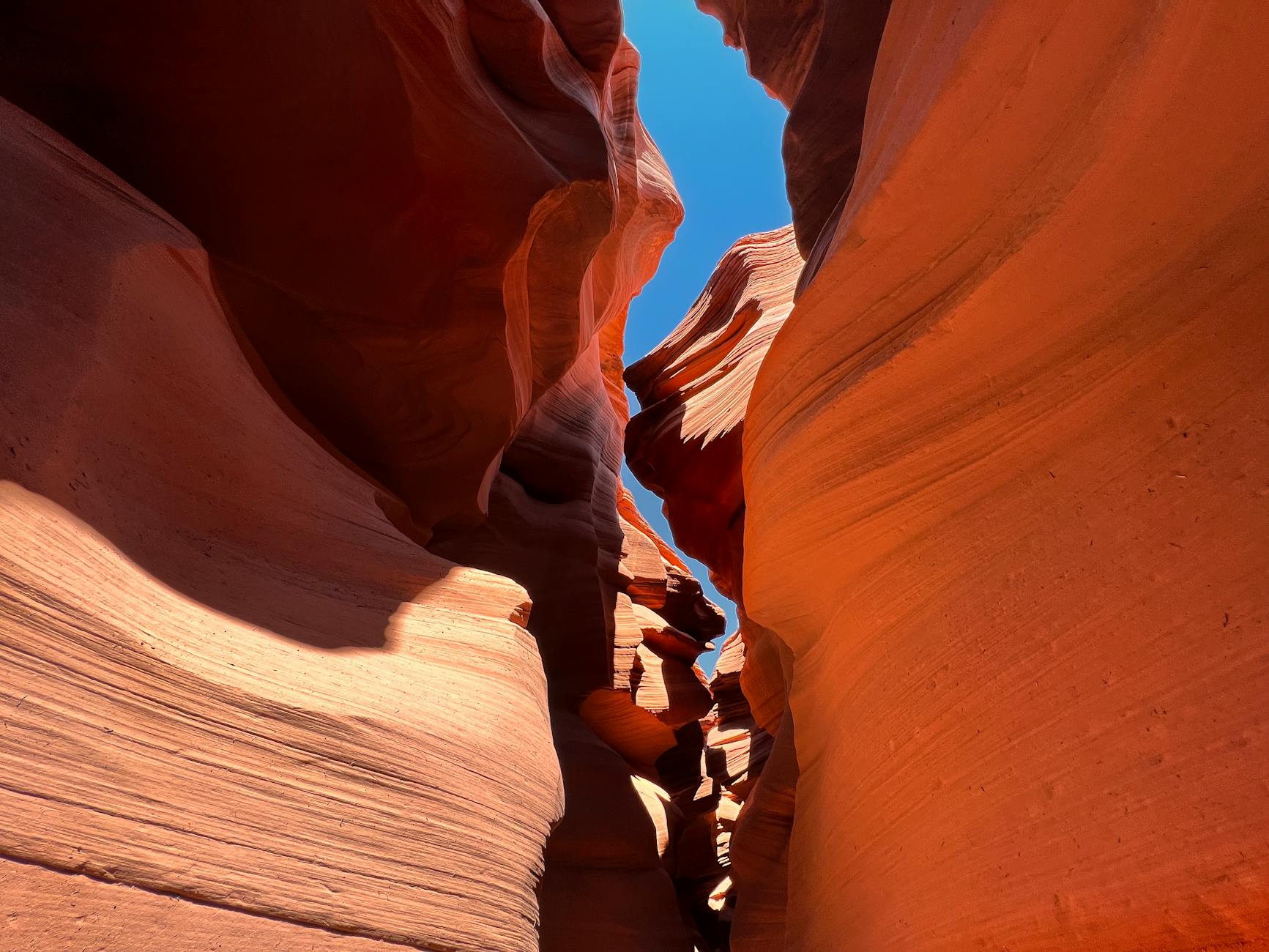
Deep inside a narrow slot canyon called Blue John, Ralston was scrambling over a suspended boulder when it shifted. In less than a second, the rock — weighing roughly 800 pounds — pinned his right hand and wrist against the canyon wall. He couldn't move it. He couldn't move himself. He was stuck in a space barely wider than his shoulders, in a place no one knew he was.
He had a small amount of water, two burritos, a video camera, and a dull multi-tool knife.
For the next 127 hours — just over five days — Ralston rationed his supplies down to nearly nothing, tried every mechanical approach he could think of to free the boulder, and slowly came to terms with the possibility that he was going to die there. He carved his name, birthday, and what he believed would be his death date into the sandstone wall. He recorded video messages to his family. He drank his own urine.
And then, on the morning of May 1, he made a decision that most people would find unthinkable.
The Decision No One Wants to Imagine
Ralston had realized days earlier that his hand had become necrotic — the tissue was dying. He'd also realized, after attempting to chip away at the rock, that he couldn't free the boulder. But what changed on that fifth morning was something harder to explain than logistics.
He had a vision. Or a hallucination. Or, depending on your worldview, something else entirely. He saw himself, from the outside, as a future version — picking up a small child with a one-armed embrace. The image was vivid and specific. And it made something click.
Using the dull blade of his multi-tool, Ralston broke both bones in his forearm by torquing his body against the boulder. Then he amputated his own arm below the elbow. The process took roughly an hour. Afterward, he rappelled down a 65-foot drop, hiked several miles through the desert, and was spotted by a family of Dutch tourists before a helicopter airlifted him to safety.
He had lost nearly 40 pounds and a significant amount of blood. He was alive.
What the Canyon Actually Cost — and What It Gave Back
The easy version of this story ends there. Man survives impossible situation. Roll credits.
But Ralston's story is more interesting than the survival itself. In interviews over the years — and in his 2004 memoir Between a Rock and a Hard Place — he's made a claim that consistently startles people: he doesn't regret going into that canyon. More than that, he's said the experience was the most important thing that ever happened to him.
That's not the kind of thing you say for headlines. For Ralston, it came from something more specific: the canyon forced him to confront a version of himself he hadn't wanted to look at. Before the accident, by his own account, he was someone who treated his freedom as an entitlement — who moved through the world on his own terms without considering what that cost the people around him. The five days in Blue John Canyon stripped that away. When he walked out, he walked out different.
Climbing Back Up
Within months of losing his arm, Ralston was back in the mountains. Within a year, he'd completed all 54 of Colorado's fourteeners — including the five he hadn't finished before the accident. He did it with a custom prosthetic and a rebuilt sense of what the mountains actually meant to him.
He became a motivational speaker, not in the generic corporate sense, but in the specific and uncomfortable sense of someone who has genuinely stared down death and has something real to say about it. He got married. He became a father — to a son, as it turned out, whom he would hold in a one-armed embrace, just like the vision.
The 2010 film 127 Hours, directed by Danny Boyle and starring James Franco, brought the story to a global audience. It was nominated for six Academy Awards. Ralston served as a consultant on the production and reportedly watched the amputation scene sitting next to Franco without flinching.
The Odds He Chose
What makes Ralston's story remarkable — beyond the sheer physical brutality of what he survived — is the question it raises about the relationship between catastrophe and transformation. Most of us spend a lot of energy trying to avoid the worst possible outcomes. Ralston walked into one, and walked out saying it remade him.
That's not a prescription. Nobody is suggesting you hike into remote desert canyons alone without telling anyone. But embedded in Ralston's story is something worth sitting with: the idea that the moments that break us open are sometimes the same ones that finally let us see clearly.
He bet his life on a million-to-one shot — not intentionally, but completely. And when the odds came due, he reached for a dull knife and paid them.
The mountain, it turns out, was always going to be there. He just had to survive the canyon first.