Against All Odds: When Zero Percent Chance Became 100 Percent Legend

Sometimes the most remarkable stories begin with the most unremarkable predictions. These ten Americans faced odds so astronomically stacked against them that their names became synonymous not just with success, but with the beautiful impossibility of the American dream itself.
1. Seabiscuit's Jockey: Red Pollard
The Odds: A half-blind jockey riding a "broken-down" horse against the greatest racehorse of the era.
In 1938, Red Pollard was literally riding blind—he'd lost sight in his right eye years earlier but hid it from racing officials. His mount, Seabiscuit, was considered a has-been by most experts. When they faced War Admiral, the Triple Crown winner, in the "Match Race of the Century," legitimate oddsmakers gave them virtually no chance.
The Santa Anita Handicap had become Pollard and Seabiscuit's white whale—they'd lost it twice in heartbreaking fashion. When Pollard suffered a leg injury that left him barely able to walk, let alone race, most assumed the story was over.
But on March 2, 1940, with his leg held together by sheer will and his vision compromised, Pollard guided Seabiscuit to victory in the Santa Anita Handicap. The crowd of 78,000 erupted in what many called the greatest upset in racing history.
What flipped the script: Pure stubborn refusal to accept limitations that seemed absolute.
2. The Dropout President: Harry Truman
The Odds: A failed haberdasher with a high school education beating the heavily favored Thomas Dewey in 1948.
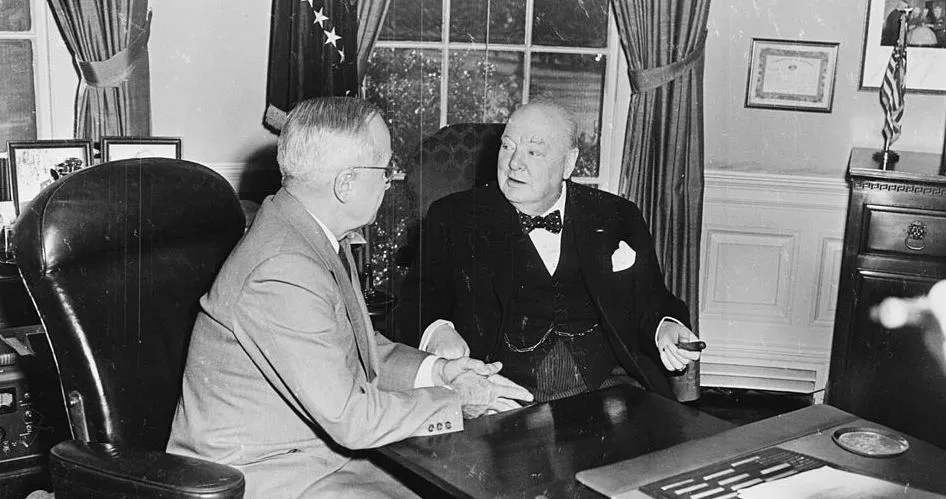 Photo: Harry Truman, via winstonchurchill.hillsdale.edu
The Chicago Tribune was so confident in Dewey's victory they printed "DEWEY DEFEATS TRUMAN" before the votes were fully counted. Political experts, pollsters, and pundits had written Truman's political obituary months before the election.
Truman had never attended college, had failed in multiple business ventures, and was seen as an accidental president who'd inherited the office after FDR's death. His approval ratings were in the basement, his party was split, and even his own advisors suggested he step aside.
Instead, Truman embarked on a whistle-stop campaign, traveling 22,000 miles and delivering over 350 speeches directly to the American people. He ignored the polls, the pundits, and the conventional wisdom.
What flipped the script: Direct connection with voters who felt forgotten by the political establishment.
3. The Blind Mathematician: Geerat Vermeij
The Odds: Born blind, pursuing a career in a field that seemed to require sight above all else.
When Geerat Vermeij was born blind in 1946, the idea that he could become a world-renowned biologist seemed impossible. How could someone study marine life without being able to see it?
Vermeij developed an extraordinary sense of touch, learning to "read" shells and marine creatures with his fingers in ways that sighted researchers couldn't match. He could identify species, detect evolutionary adaptations, and understand predator-prey relationships through tactile examination alone.
His groundbreaking work on shell evolution and predation patterns revolutionized marine biology. He became a professor at UC Davis and one of the most cited researchers in his field.
What flipped the script: Turning a perceived disability into a unique analytical advantage.
4. The Janitor's Daughter: Ursula Burns
The Odds: A girl from a Lower East Side housing project becoming CEO of a Fortune 500 company.
Ursula Burns grew up in a New York housing project where her mother cleaned office buildings to support three children. The idea that she would one day run Xerox Corporation—becoming the first Black woman to lead a Fortune 500 company—seemed beyond remote.
Burns worked her way through engineering school, started as a Xerox intern, and slowly climbed the corporate ladder over 30 years. When she was named CEO in 2009, she broke barriers that many thought were permanently sealed.
What flipped the script: Relentless focus on excellence and an unwillingness to be defined by others' expectations.
5. The Stuttering Sportscaster: Mel Tillis
The Odds: A man with a severe stutter becoming one of country music's most successful performers.
Mel Tillis stuttered so badly as a child that classmates mocked him mercilessly. The idea that he could make a living with his voice seemed cruel irony. But Tillis discovered something remarkable: when he sang, the stutter disappeared completely.
He wrote over 1,000 songs, recorded dozens of albums, and became a Grand Ole Opry legend. His speaking voice remained halting throughout his career, but his singing voice was pure gold.
What flipped the script: Finding the one medium where his "disability" didn't exist.
6. The Homeless Harvard Student: Liz Murray
The Odds: A teenager living on the streets completing high school and earning admission to Harvard.
Liz Murray was homeless at 15, sleeping in subway stations and hallways after her drug-addicted parents lost their apartment. She hadn't attended school regularly in years and seemed destined for the same cycle of addiction and poverty that claimed her family.
Instead, Murray enrolled in an alternative high school and completed four years of coursework in two years while still living on the streets. Her essay about homelessness and education earned her a full scholarship to Harvard.
What flipped the script: Viewing education as the ultimate escape route and refusing to let circumstances define possibilities.
7. The Dyslexic Filmmaker: Steven Spielberg
The Odds: A dyslexic student who struggled to read becoming history's most successful filmmaker.
 Photo: Steven Spielberg, via static1.srcdn.com
Spielberg wasn't diagnosed with dyslexia until age 60, but he'd struggled with reading throughout school. Teachers and classmates often dismissed him as lazy or unintelligent. The idea that someone who couldn't easily process written words would master the art of visual storytelling seemed contradictory.
But Spielberg's learning difference forced him to think in images rather than words. He became a master of visual narrative, creating some of cinema's most memorable and emotionally powerful moments.
What flipped the script: Compensating for one form of communication by mastering another.
8. The Welfare Mom Senator: Carol Moseley Braun
The Odds: A single mother on public assistance becoming the first Black woman elected to the U.S. Senate.
Carol Moseley Braun was a divorced mother relying on public assistance when she decided to pursue law school. The idea that she would eventually represent Illinois in the Senate—breaking both racial and gender barriers—seemed impossible.
She worked her way through law school, served in the Illinois state legislature, and then launched an unlikely Senate campaign in 1992. Despite being outspent and underestimated, she won both the primary and general election.
What flipped the script: Turning personal struggles into political passion for helping others.
9. The Illiterate Inventor: Thomas Edison
The Odds: A child dismissed as "too stupid to learn anything" becoming America's greatest inventor.
Edison attended school for only three months before his teacher declared him "addled" and suggested he was too stupid to learn. His mother pulled him out of school, and he was largely self-taught from that point forward.
That "unteachable" child went on to hold 1,093 patents and invent devices that transformed human civilization, including the light bulb, the phonograph, and the motion picture camera.
What flipped the script: Learning through experimentation rather than traditional education.
10. The Minimum-Wage Mogul: Howard Schultz
The Odds: A kid from Brooklyn housing projects building a global coffee empire.
Howard Schultz grew up in the Canarsie-Bayview Houses, where his father worked a series of low-paying jobs without benefits. When his father broke his ankle and lost his job, the family had no safety net. The idea that Howard would one day build Starbucks into a global phenomenon seemed absurd.
Schultz was the first in his family to attend college, worked his way up through sales jobs, and eventually convinced the founders of a small Seattle coffee company to hire him. His vision of creating a "third place" between home and work revolutionized American coffee culture.
What flipped the script: Seeing opportunity where others saw only a commodity product.
The Beautiful Mathematics of Impossible
What connects these stories isn't just their against-all-odds nature—it's the way each person transformed their greatest obstacle into their greatest strength. They didn't succeed despite their circumstances; they succeeded because those circumstances forced them to develop unique perspectives and unconventional solutions.
In America, the longest odds sometimes produce the most remarkable outcomes. These ten proved that when conventional wisdom declares something impossible, it might just be that nobody's tried the right approach yet.